
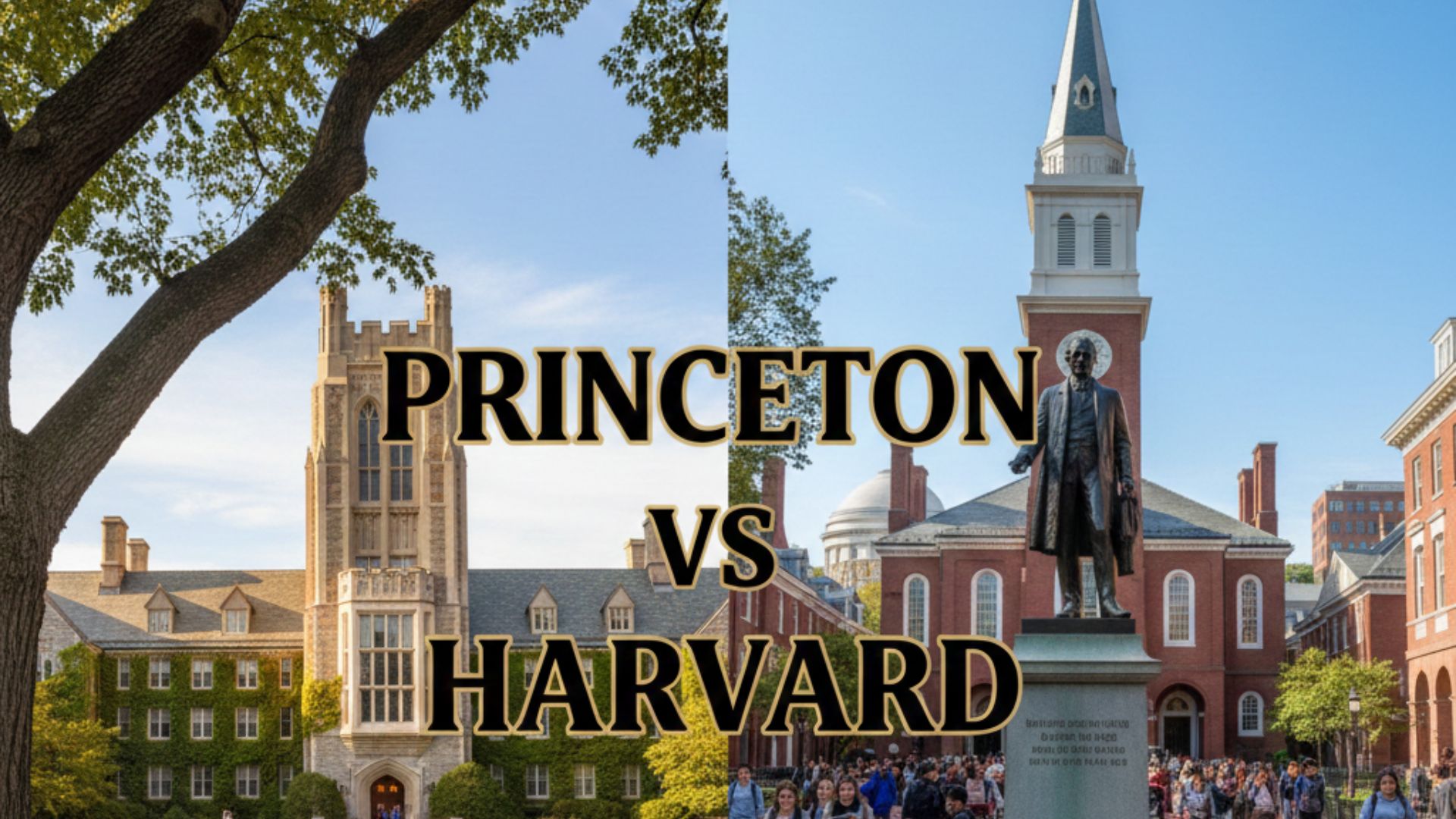
Is Princeton Better Than Harvard: The debate over whether Princeton University is better than Harvard University has existed for decades. Both institutions represent the pinnacle of higher education, academic excellence, research influence, and global prestige. Princeton and Harvard are not only among the oldest universities in the United States, but they are also two of the most selective, well-funded, and globally respected institutions. As a result, students, parents, and educators often struggle to determine which university is truly “better.”
However, answering this question requires a nuanced approach. No single institution can universally be declared superior for all students, because the definition of “better” depends on priorities, academic interests, career goals, learning preferences, and campus culture. Some students prefer the intimate, undergraduate-focused environment of Princeton, while others value the extensive resources, global networks, and professional school opportunities offered by Harvard. In short, the two universities excel in different ways, and understanding these differences is essential.
This article presents an in-depth comparison of Princeton and Harvard across several major categories: academics, faculty and research, campus life, student experience, career opportunities, global reputation, financial aid, and long-term outcomes. The goal is to provide clarity for students and families seeking to make an informed decision.
Historical Overview
Harvard University
Founded in 1636, Harvard is the oldest institution of higher learning in the United States. Over the centuries, it has built an unmatched legacy of global influence, producing presidents, world leaders, Nobel laureates, innovators, and scholars. Harvard is known for combining academic excellence with unparalleled research power and professional education through its business, law, and medical schools. It has established itself as a global brand with considerable authority in nearly every academic field.
Princeton University
Established in 1746, Princeton is the fourth-oldest university in the United States. Unlike Harvard, Princeton has retained a strong liberal arts identity with a primary focus on undergraduate education. While it also supports advanced research and graduate studies, Princeton is often recognized for its small class sizes, close student-faculty relationships, and a strong emphasis on independent research. Princeton’s academic environment is known to be intimate and rigorous, with programs designed to foster deep intellectual exploration.
Both universities share centuries of tradition, scholarly excellence, and a central role in shaping American higher education. Yet, the differences in their structure and emphasis make them uniquely appealing to different types of students.
Academic Comparison
1. Undergraduate Teaching Quality
Princeton is widely praised for its undergraduate teaching model. Small class sizes and a low student-faculty ratio create a personalized environment where students regularly engage in discussions, seminars, and one-on-one mentorship. Independent research and theses are also central components of a Princeton education.
Harvard has a much larger undergraduate body and a broader institutional focus. While its faculty includes leading scholars and researchers, undergraduate class sizes can be larger, especially in introductory courses. However, Harvard supplements lectures with smaller discussion sections led by teaching fellows and provides vast opportunities for students to collaborate with world-renowned professors.
Verdict: For students seeking intimate classroom environments and close faculty interaction, Princeton tends to be better. For students who prefer a combination of large academic resources and world-class instructors, Harvard may be more appealing.
2. Academic Programs and Curriculum
Harvard offers an unmatched range of programs across arts, sciences, engineering, social sciences, humanities, and professional fields. The university’s scale enables it to provide extensive interdisciplinary pathways, joint programs, and research centers.
Princeton offers a smaller but highly curated selection of programs, with particular strength in mathematics, physics, engineering, public policy, and the humanities. The curriculum is rigorous and structured, often requiring independent work in the form of junior papers and a senior thesis.
Verdict: If program variety and interdisciplinary options are priorities, Harvard may be better. If depth, rigor, and a more structured liberal arts experience are important, Princeton stands out.
3. Faculty and Research Opportunities
Harvard is one of the world’s most influential research universities, with massive funding, laboratories, and research institutes across nearly every field. Students have opportunities to participate in projects at the cutting edge of science, technology, medicine, and social innovation.
Princeton is also a research powerhouse, but with a stronger undergraduate focus. Undergraduates frequently collaborate with faculty directly, and research opportunities are widely available but often embedded within a smaller academic community.
Verdict: For large-scale research infrastructure, Harvard is stronger. For personalized undergraduate research experiences, Princeton excels.
Campus Life and Student Experience
1. Campus Environment
Princeton’s campus is known for its traditional collegiate Gothic architecture, serene environment, and cohesive residential college system. The campus feels intimate, walkable, and community-driven.
Harvard’s campus, located in Cambridge near Boston, offers an energetic urban environment. Students have access to a vibrant academic and cultural ecosystem, numerous institutions, and a broader metropolitan experience.
Verdict: Students seeking a peaceful, small-town setting may prefer Princeton. Those wanting urban life with extensive off-campus activity may prefer Harvard.
2. Housing and Residential Life
Princeton guarantees housing for all four years, and most students live on campus. The residential college system fosters close-knit communities.
Harvard also offers a strong residential system, particularly through the House system for upperclassmen, which provides academic support, social life, and traditions. Freshmen live in Harvard Yard, which builds a shared first-year community.
Both universities emphasize community-building, but Princeton’s environment feels smaller and more unified.
3. Extracurricular Activities
Both institutions offer rich opportunities in athletics, performing arts, cultural groups, student publications, debate, community service, and more.
Harvard’s student organizations are extensive due to its size and location, with opportunities to engage with Boston-area institutions.
Princeton offers a more close-knit extracurricular scene, with strong traditions and residential participation.
Admissions and Selectivity
Both universities are among the most selective in the world, with acceptance rates typically in the low single digits. Princeton and Harvard both evaluate applicants holistically, emphasizing academic excellence, intellectual curiosity, extracurricular leadership, personal character, and potential contributions to the campus community.
In recent years, Princeton has occasionally posted slightly lower acceptance rates, but this difference does not necessarily imply greater difficulty. Both universities are extremely competitive, and the distinction is negligible.
Career Prospects and Alumni Networks
1. Career Opportunities
Harvard’s location near Boston, extensive alumni network, and proximity to major industries offer numerous internships and employment opportunities. Harvard students are heavily recruited in finance, consulting, technology, public policy, academia, and medicine.
Princeton also produces highly successful graduates across fields, with particularly strong outcomes in academia, government, engineering, physics, and finance. Princeton alumni are widely respected, and its career services focus heavily on mentorship and long-term development.
2. Alumni Influence
Harvard’s alumni network is arguably the largest and most influential in the world, spanning politics, business, science, and the arts. Former U.S. presidents, CEOs, world leaders, and Nobel laureates frequently come from Harvard.
Princeton also has an influential alumni base, with leaders in public policy, economics, literature, and science. While Princeton’s network is smaller, it is highly engaged and supportive.
Verdict: Harvard has a broader global network, while Princeton provides a strong yet more intimate alumni support system.
Financial Aid and Affordability
Both universities offer need-based financial aid programs that make them affordable for students from diverse economic backgrounds. Princeton, however, is often noted for its particularly generous aid packages, including a longstanding no-loan policy that reduces student debt.
Harvard’s financial aid is also exceptional, supporting students from low-income, middle-income, and even upper-middle-income families.
Verdict: Princeton edges ahead slightly due to its no-loan policy, but Harvard remains one of the most financially accessible universities.
Global Reputation and Rankings
Harvard frequently ranks at or near the top of global university rankings, particularly for research, professional outcomes, and international prestige. It is recognized worldwide as a symbol of elite education.
Princeton often excels in national undergraduate rankings, particularly for teaching quality and student satisfaction. It is consistently near the top of U.S. university rankings.
Verdict: Harvard tends to dominate international prestige, while Princeton leads in undergraduate-focused excellence.
Is Princeton Better Than Harvard? A Fair Conclusion
The question of whether Princeton is better than Harvard cannot be answered with a simple yes or no. Each university excels in different areas, and the best choice depends on individual priorities.
Princeton may be better if you value:
- A smaller, close-knit campus environment
- Exceptional undergraduate teaching
- Low student-faculty ratio
- Structured liberal arts curriculum
- Generous financial aid with a no-loan policy
- Intimate research opportunities
Harvard may be better if you value:
- Global prestige and a massive alumni network
- Broad interdisciplinary academic options
- Access to professional schools and major research hospitals
- Urban energy and cultural experiences
- Large-scale research infrastructure
- Long-term global career mobility
Both institutions provide extraordinary opportunities, world-class education, and lifelong networks. Rather than trying to determine which university wins universally, students should focus on which university aligns best with their academic goals, personality, and future aspirations.
FAQ about Is Princeton Better Than Harvard
Which university is harder to get into, Harvard or Princeton?
Both are extremely competitive with very low acceptance rates. The difference in selectivity is minor and varies year to year.
Is Princeton better for undergraduate studies?
Many students believe Princeton offers a more focused undergraduate experience due to its small class sizes and emphasis on teaching. However, Harvard also provides exceptional undergraduate resources.
Does Harvard have better career opportunities?
Harvard’s global alumni network and proximity to major industries give it advantages in certain fields. Princeton also offers strong outcomes, particularly in research, finance, engineering, and public policy.
Which campus environment is better?
This depends on personal preference. Princeton offers a quiet, suburban environment, while Harvard offers an urban experience with access to Boston’s cultural and professional scenes.
Are both universities affordable?
Yes. Both Harvard and Princeton offer generous need-based financial aid, making them affordable for students from a wide range of backgrounds.
Is one university more prestigious than the other?
Harvard tends to have broader global name recognition, while Princeton is often ranked highest in undergraduate-focused national rankings.
Which university is better for research?
Harvard has larger research infrastructure, but Princeton offers more personalized research mentorship for undergraduates.
Conclusion
Princeton and Harvard are two of the most respected universities in the world, each offering exceptional academic and personal development opportunities. Princeton excels in undergraduate education, community cohesion, and financial accessibility. Harvard stands out in global prestige, research capacity, and career influence.
Ultimately, the choice between Princeton and Harvard should be guided not by generic rankings, but by the student’s individual goals, preferences, and learning style. Both institutions can provide life-changing experiences, and either choice represents entry into a world of knowledge, opportunity, and achievement.