

Harvard Waitlist Acceptance Rate: For many applicants, receiving a waitlist decision from Harvard University is both encouraging and daunting. It signals that the applicant’s profile is strong enough to merit serious consideration but not yet finalized due to limited available seats. Understanding the Harvard waitlist acceptance rate, how the waitlist works, and what an applicant can do to strengthen their chances is essential for navigating this challenging but hopeful phase of the admissions journey.
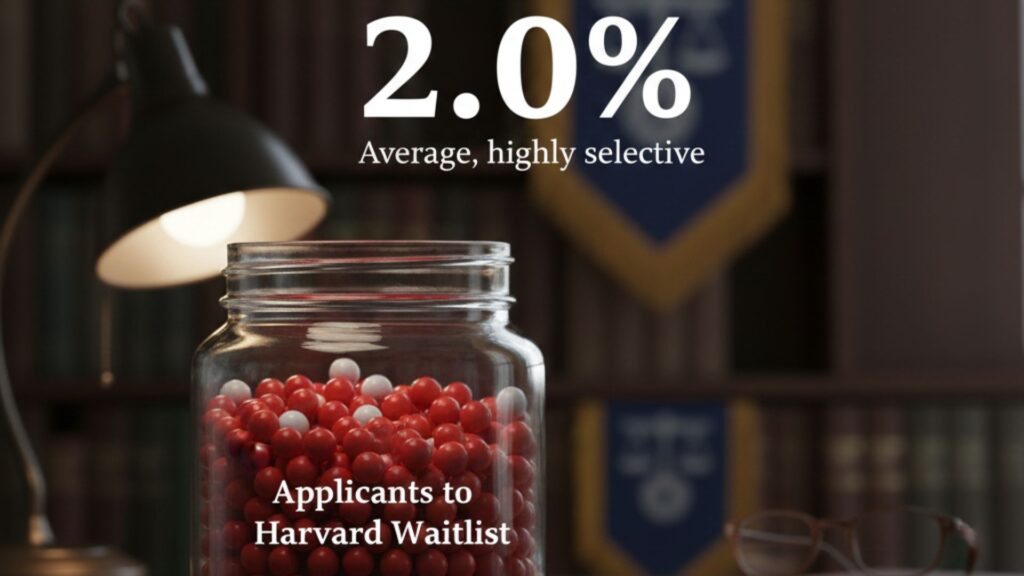
This article provides an in-depth analysis of the Harvard waitlist acceptance rate, historical consistency, contributing factors, next steps for waitlisted applicants, and realistic expectations. It also includes a table of helpful links, the complete waitlist timeline, and a detailed FAQ section.
Understanding the Harvard Waitlist System
Harvard University receives tens of thousands of applications each year for a freshman class of roughly 1,600–1,700 students. Due to extremely competitive admissions standards, the university maintains a waitlist to ensure that the final enrolled class fits their enrollment targets.
The waitlist serves as a buffer to account for:
- Unpredictable yield rates
- Accepted students choosing other universities
- Harvard’s commitment to shaping a diverse, balanced class
- Institutional needs such as academic interests, geographical distribution, and extracurricular strengths
When the admissions committee needs additional students after admitted candidates respond to their offers, they turn to the waitlist.
It is important to note that Harvard does not rank the waitlist. Applicants are reviewed again holistically if and when space becomes available.
Harvard Waitlist Acceptance Rate Overview
Harvard is known for having one of the lowest waitlist acceptance rates among elite institutions. In most years, the number of students admitted from the waitlist is minimal, and in rare years, no waitlisted applicants are admitted at all.
While the exact number varies year to year, historically:
- The waitlist acceptance rate is often below 5 percent.
- Some years have acceptance rates between 0 and 2 percent.
- In a strong yield year, zero students may be admitted from the waitlist.
- In an unusually low-yield year, Harvard may accept 30 to 40 students from the waitlist, but this is increasingly rare.
Since Harvard’s overall acceptance rate hovers around 3 to 4 percent, the waitlist acceptance rate tends to be even lower. The waitlist serves as a safety net for enrollment management rather than an extended admissions round.
Why Harvard’s Waitlist Acceptance Rate Is Extremely Low
Several factors contribute to this low acceptance rate:
1. High Yield Rate
The percentage of accepted students who choose to attend Harvard is among the highest of any university. This means fewer seats become available after the initial admission round.
2. Over-enrollment Caution
Harvard maintains strict class-size management to ensure adequate dormitory space, class availability, and student resources. As a result, they accept only the exact number of students required.
3. Large Waitlist Pool
Harvard’s waitlist typically contains thousands of students. Even if some are accepted, the percentage relative to the total pool is extremely small.
4. Holistic Review Is Revisited
Applicants are not admitted in the order they were waitlisted. Instead, the admissions committee reviews applications again and admits candidates who fill specific institutional needs at that moment.
5. Strong Application Profiles
Students placed on the waitlist are already exceptional. Therefore, the competition among waitlisted applicants is comparable to, if not greater than, the regular applicant pool.
Harvard Waitlist Timeline
While specific dates may vary, the general timeline follows this pattern:
| Stage | Typical Timeframe |
|---|---|
| Regular Decisions Released | Late March |
| Waitlist Activation | Late March to early April |
| Applicant Response Deadline | Early April |
| First Wave of Waitlist Offers | Early May |
| Additional Waves (If Needed) | Late May to early June |
| Final Waitlist Closure | Early July |
By mid-summer, the incoming class is finalized, and admissions sometimes send closure notices to remaining waitlisted applicants.
What to Do If You Are Waitlisted at Harvard?
A waitlist decision is not the end of the road. Strong, proactive steps can improve your chances, though admission is never guaranteed.
1. Accept Your Spot on the Waitlist Promptly
Harvard requires students to confirm their desire to remain on the waitlist. Missing this deadline results in removal from consideration.
2. Write a Strong, Focused Letter of Continued Interest (LOCI)
A LOCI is essential and should include:
- A clear statement that Harvard remains your top choice
- Significant achievements since your application
- Updated academic or extracurricular accomplishments
- A reaffirmed commitment to attending if admitted
The tone should be sincere, confident, and concise.
3. Continue Academic Excellence
Harvard reviews updated transcripts. Any drop can reduce your likelihood of acceptance.
4. Provide Meaningful Updates
Submit notable progress such as:
- Awards
- Leadership positions
- Research milestones
- Athletic achievements
- Publications or competition results
5. Avoid Excessive or Unnecessary Communication
Harvard does not favor repeated emails or additional essays unless they are meaningful.
6. Secure Your Backup Plan
Commit to another school by the May 1 deadline. Even while hoping for Harvard, it is important to have a reliable confirmed option.
Does Being Waitlisted at Harvard Mean You Still Have a Chance?
Yes, being waitlisted means the admissions committee believes you are academically and personally qualified. If the class has space, you may be admitted.
However, the chance is very small. Statistically, many students remain on the waitlist until the end without receiving final admission.
The emotional aspect is important as well. Students should stay hopeful but realistic, acknowledging that the odds are low even for outstanding applicants.
What Qualities Make a Waitlisted Applicant More Likely to Be Admitted?
Harvard may revisit applications based on:
- Academic strengths that align with department needs
- Demographic distribution, including state or region representation
- Extracurricular talents, especially in areas like arts, athletics, or research
- Leadership qualities
- Unique accomplishments achieved after the initial application
Some years, Harvard may seek more students in specific academic areas, such as engineering, humanities, or sciences. This can influence which waitlisted candidates are selected.
Common Myths About the Harvard Waitlist
Myth 1: More emails and letters improve your chances.
Untrue. Quality matters more than quantity.
Myth 2: The waitlist is ranked.
It is not. Applicants are reconsidered holistically.
Myth 3: Financial aid affects waitlist decisions.
Harvard is need-blind, meaning financial circumstances do not influence admissions.
Myth 4: Being waitlisted is a soft rejection.
Not necessarily. Some applicants do get admitted, though the number is small.
Myth 5: If you were waitlisted, you must have done something wrong.
This is untrue. Often, the decision is due to limited space or institutional priorities.
Important Harvard Waitlist Resources and Information
| Resource Name | Description | Link |
|---|---|---|
| Harvard Admissions Portal | Manage your application and submit waitlist responses | https://college.harvard.edu |
| Harvard Financial Aid Office | Information about aid, scholarships, and affordability | https://college.harvard.edu/financial-aid |
| Harvard Admissions Contact Page | Ask questions or request support | https://college.harvard.edu/contact-us |
| Harvard FAQ Page | General admissions information | https://college.harvard.edu/faqs |
| Harvard Academic Calendar | Important university dates | https://registrar.fas.harvard.edu |
FAQ Harvard Waitlist Acceptance Rate
Does Harvard ever accept students from the waitlist?
Yes. Though rare, Harvard does admit students from the waitlist when space becomes available.
How many students are usually put on the Harvard waitlist?
It varies by year, but Harvard may place thousands of students on the waitlist.
What percentage of waitlisted applicants get admitted?
Often below 5 percent, and in some years, the rate is zero.
Does my financial situation affect my chances of getting off the waitlist?
No. Harvard maintains a need-blind admissions process.
Should I send additional letters of recommendation?
Only if they provide new, meaningful insight. Otherwise, additional letters are not necessary.
When does Harvard finalize waitlist decisions?
Typically by early July, when the incoming class is confirmed.
Can international students be admitted from the waitlist?
Yes, international students are considered equally.
Is the Harvard waitlist binding?
No. You can accept or decline the offer.
Conclusion
The Harvard waitlist acceptance rate is extremely low, often below 5 percent and sometimes dropping to zero in a given year. While being waitlisted at Harvard reflects a strong, highly competitive application, it does not guarantee eventual admission. Applicants must take strategic steps, such as submitting a strong letter of continued interest and maintaining strong academic performance, to improve their chances.
Ultimately, the waitlist serves as an enrollment management tool rather than an extended round of admissions. Though the odds are slim, thoughtful, proactive, and well-prepared applicants may still find themselves admitted if Harvard has available space.
Even so, applicants should focus on securing an alternative enrollment option while remaining open to the possibility of a Harvard acceptance. Regardless of the outcome, being waitlisted at such a selective institution is an achievement in itself.