
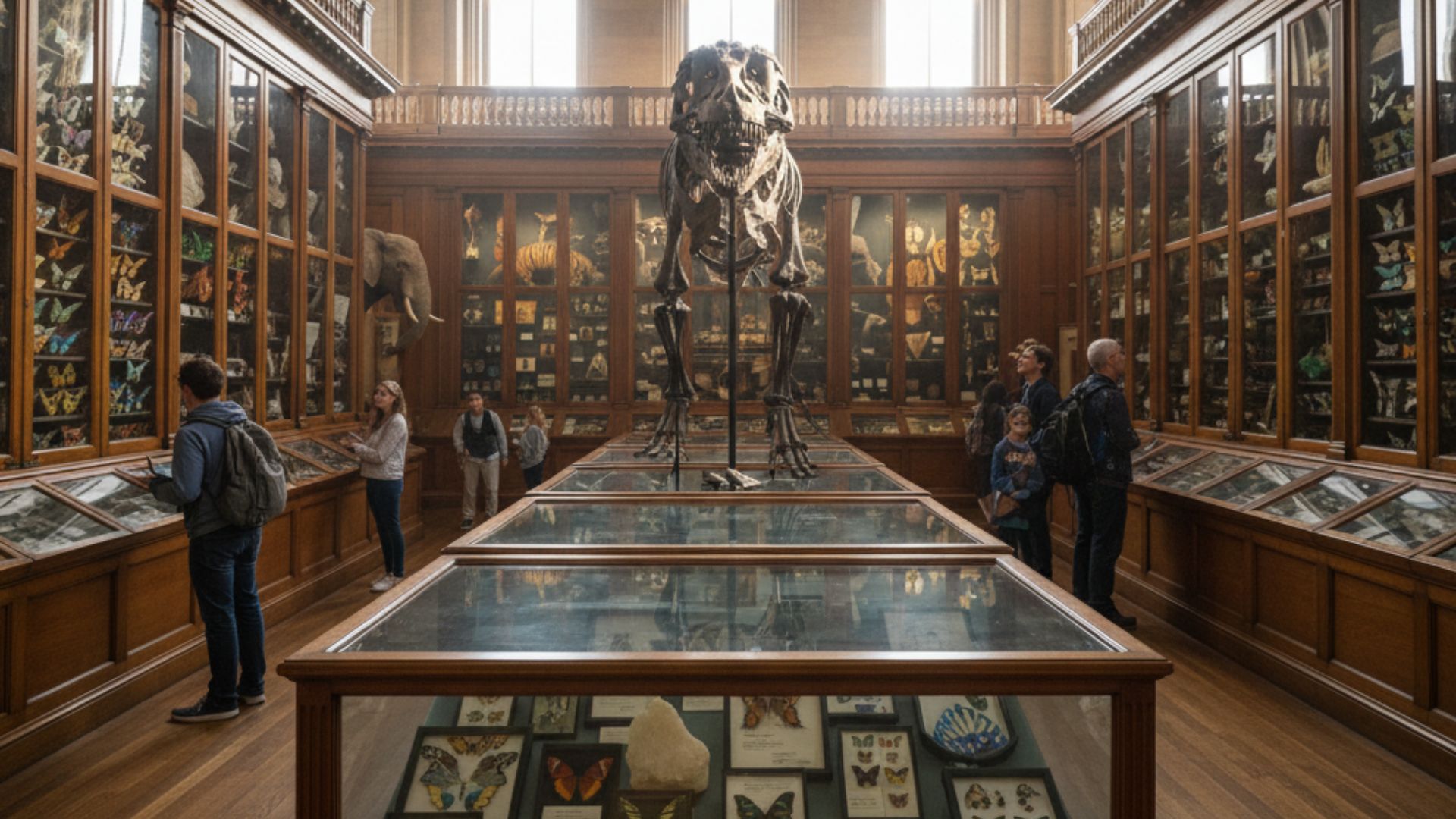
Harvard Natural History Museum: The Harvard Museum of Natural History (HMNH) stands as one of the most fascinating and educational attractions in Cambridge, Massachusetts. It captures the wonder of the natural world through its world-class collections, interactive exhibits, and educational programs that inspire curiosity in visitors of all ages. From dazzling gemstones and prehistoric fossils to rare animal specimens and plant displays, the museum brings science and history to life.
In this comprehensive guide, we’ll explore everything you need to know about the Harvard Museum of Natural History — its history, exhibits, educational importance, visitor experience, and why it continues to be a cornerstone of Harvard’s public engagement with science.
Important Links and Information
| Category | Information |
|---|---|
| Full Name | Harvard Museum of Natural History (HMNH) |
| Founded | 1998 (as a public museum integrating three Harvard research museums) |
| Location | 26 Oxford Street, Cambridge, Massachusetts, USA |
| Affiliation | Harvard University, Faculty of Arts and Sciences |
| Opening Hours | Daily, 9:00 AM – 5:00 PM |
| Admission Fees | Adults: $15, Seniors (65+): $13, Students (with ID): $10, Youth (3–18): $10, Children under 3: Free |
| Accessibility | Wheelchair accessible, with elevators and ramps |
| Parking | Limited street parking; public transport strongly recommended |
| Public Transit Access | Harvard Square Station (Red Line) – approximately 10-minute walk |
| Website | https://hmnh.harvard.edu |
| Contact Number | +1 (617) 495-3045 |
| hmnh@hmsc.harvard.edu | |
| Social Media | Twitter: @HarvardMuseum, Instagram: @harvardmuseum, Facebook: Harvard Museum of Natural History |
| Related Harvard Museums | Museum of Comparative Zoology, Harvard University Herbaria, Mineralogical and Geological Museum |
A Brief History of the Harvard Museum of Natural History
The Harvard Museum of Natural History was officially established in 1998, but its origins date back more than a century earlier. It was formed through the union of three of Harvard University’s oldest research museums:
- The Museum of Comparative Zoology (MCZ)
- The Harvard University Herbaria
- The Mineralogical and Geological Museum (MGM)
These institutions were founded in the 19th century and have contributed significantly to global scientific research. The HMNH was created to make these research collections accessible to the public, offering visitors an immersive way to engage with Harvard’s rich scientific heritage.
Today, the museum serves as a public interface for the Harvard research community, showcasing over 12,000 specimens drawn from more than 21 million scientific objects in Harvard’s archives.
Exhibits and Collections: A World of Discovery
The Harvard Museum of Natural History offers visitors an opportunity to journey through time and across the natural world. Each gallery is designed to highlight specific aspects of nature, evolution, and human understanding of the environment.
1. The Glass Flowers Collection
Perhaps the most famous attraction of the museum, the Glass Flowers Exhibit (formally known as The Ware Collection of Blaschka Glass Models of Plants) is a masterpiece of scientific artistry. Created by father-son glassmakers Leopold and Rudolf Blaschka between 1887 and 1936, the collection features over 4,000 hand-blown glass models of plants, flowers, and fruits.
Each piece is an incredibly accurate representation used to teach botany students before the invention of digital imaging. Visitors are often amazed at how lifelike these glass models appear — an enduring symbol of the union between science and art.
2. The Earth and Planetary Sciences Gallery
This section features gems, minerals, meteorites, and crystals from around the world. Highlights include a giant amethyst geode, meteorites from outer space, and samples illustrating the geological evolution of Earth.
The Geological Gallery provides insights into the planet’s formation, plate tectonics, and mineral structures, making it a favorite among geology enthusiasts and aspiring scientists.
3. The Paleontology and Fossil Exhibit
For fans of prehistoric life, the museum’s fossil collection offers a captivating look at evolution through time. The exhibit features dinosaur skeletons, ancient mammals, marine fossils, and detailed dioramas that bring extinct species to life.
One of the main highlights is the Triceratops skull, alongside the skeleton of a Kronosaurus, a massive marine reptile that swam the oceans millions of years ago.
This exhibit connects visitors directly to Harvard’s groundbreaking paleontological research, much of which contributed to our understanding of evolution and natural history.
4. The Comparative Zoology Collection
This exhibit draws specimens from Harvard’s Museum of Comparative Zoology, founded by the renowned naturalist Louis Agassiz in 1859. Visitors can see preserved specimens of mammals, birds, reptiles, and insects — many collected during major 19th and 20th-century expeditions.
From a tiger skeleton to a giant whale jaw, the zoological displays illustrate the vast diversity of animal life and the scientific principles behind adaptation and biodiversity.
5. The New England Forests Exhibit
This regional exhibit focuses on ecology, conservation, and environmental change in the forests of New England. Visitors learn about local species such as the black bear, moose, and bobcat, while interactive elements explain forest succession, human impact, and climate change effects.
It’s a great educational experience for school groups and families, connecting global environmental challenges with local ecosystems.
6. The Arthropods: Creatures That Rule Exhibit
This newer addition highlights the dominant role insects and arthropods play in the natural world. The exhibit features magnified models, live colonies (in some seasons), and preserved specimens that reveal the astonishing diversity of arthropod life.
Educational and Research Significance
As part of Harvard University, the museum serves as both a public educational space and a research hub. Students, professors, and visiting scientists from around the world use the collections for studies in:
- Evolutionary biology
- Paleontology
- Geology
- Botany
- Climate science
- Anthropology
Educational programs offered by the museum include lectures, workshops, and outreach programs for schools. It also hosts family science events, where children can interact with hands-on displays and meet Harvard scientists.
Visitor Experience and Facilities
The Harvard Museum of Natural History offers a welcoming and accessible environment for visitors of all ages.
Highlights of the Visitor Experience:
- Accessibility: The museum provides wheelchair ramps, elevators, and accessible restrooms.
- Museum Shop: Offers books, minerals, educational toys, and Harvard-themed souvenirs.
- Guided Tours: Led by knowledgeable docents, available for groups and educational visits.
- Photography: Permitted in most areas for personal use.
- Café Access: Nearby cafés and dining options available around Harvard Square.
- Family-Friendly Activities: Interactive sections designed for young learners.
Location and How to Get There
The museum is conveniently located near Harvard Yard, just north of Harvard Square in Cambridge.
Address:
26 Oxford Street, Cambridge, MA 02138
Directions:
- By Subway (MBTA): Take the Red Line to Harvard Square Station, then walk about 10 minutes along Kirkland or Cambridge Street to Oxford Street.
- By Bus: Routes 68 and 69 stop near the museum.
- By Car: Limited metered parking available on Oxford and Kirkland Streets; visitors are encouraged to use public transportation.
Why Visit the Harvard Museum of Natural History?
There are countless reasons to explore the Harvard Museum of Natural History, but a few stand out:
- Educational Value: Offers a rare chance to see real scientific specimens and world-renowned collections.
- Historic Importance: Represents over 150 years of Harvard’s contributions to science.
- Family Appeal: Engaging exhibits suitable for children, students, and adults alike.
- Cultural Connection: Combines art, science, and history in one enriching experience.
- Affordable Access: Reasonable entry fees make it one of Boston’s most accessible learning destinations.
Whether you’re a tourist, student, or lifelong learner, the museum promises a day filled with awe and discovery.
FAQ about Harvard Natural History Museum
What is the Harvard Museum of Natural History known for?
It is best known for its Glass Flowers collection, fossil displays, and gem and mineral exhibits, which attract visitors from all over the world.
When was the Harvard Museum of Natural History founded?
The museum was established in 1998, but its collections date back to the 19th century through Harvard’s scientific research departments.
Is the museum suitable for children?
Yes. The museum is highly family-friendly, offering interactive exhibits and educational programs that cater to children and students.
How much time should I spend at the museum?
Most visitors spend 1.5 to 2 hours exploring the exhibits in detail.
Does the museum have guided tours?
Yes. Guided tours and group visits can be arranged in advance through the museum’s official website.
Are there parking facilities nearby?
Limited metered parking is available on nearby streets, but visitors are encouraged to use public transportation.
What other museums are nearby?
The museum is part of the Harvard Museums of Science & Culture (HMSC), which also includes:
Harvard Museum of the Ancient Near East
Peabody Museum of Archaeology & Ethnology
Collection of Historical Scientific Instruments
Is photography allowed?
Yes, non-flash photography for personal use is allowed in most galleries.
Conclusion
The Harvard Museum of Natural History is more than just a museum — it’s a living classroom, a repository of global scientific knowledge, and a celebration of the natural world. Every exhibit tells a story about life, evolution, and the interconnectedness of all things on Earth.
From the breathtaking Glass Flowers to ancient fossils and meteorites, the museum offers something for everyone. Whether you are a scientist, student, or traveler, a visit to this museum enriches your understanding of both nature and humanity’s pursuit of knowledge.
If you ever find yourself in the Boston-Cambridge area, make sure to stop by the Harvard Museum of Natural History—a destination that truly brings science to life.