
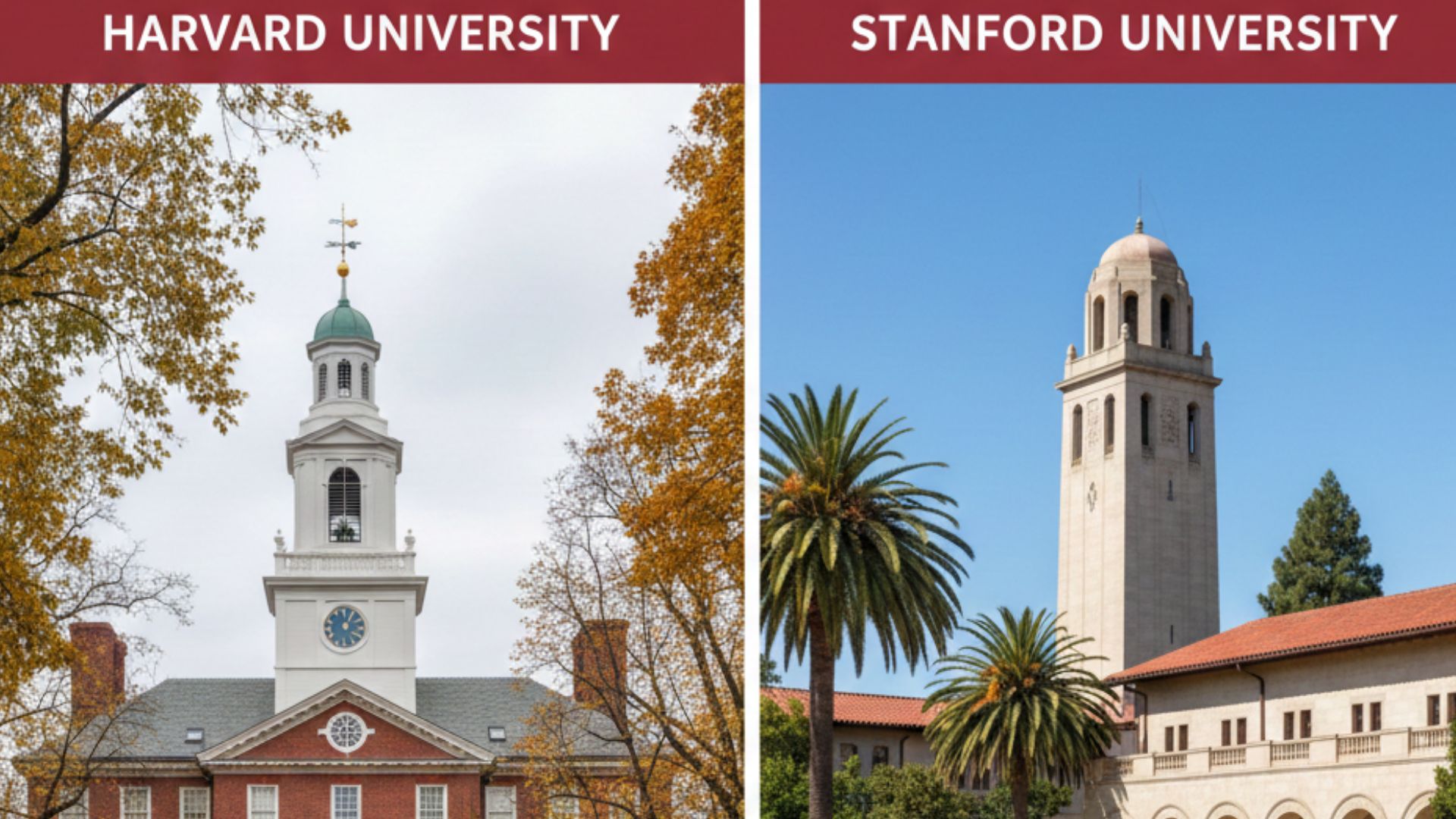
Harvard and Stanford University: Choosing the right university is one of the most important decisions in a student’s life. Among the most prestigious institutions in the world, Harvard University and Stanford University stand unmatched in academic excellence, global reputation, financial resources, and research impact. While both universities represent the pinnacle of higher education, they differ significantly in their history, culture, environment, academic focus, and student lifestyle.
This article provides a comprehensive comparison of Harvard and Stanford University, covering their history, academic programs, admission requirements, fees, financial aid, research opportunities, campus life, career outcomes, and more. It also includes a table of important links, a detailed FAQ section, and a well-rounded conclusion to help students make an informed choice.
Introduction
Harvard University, founded in 1636, is the oldest institution of higher education in the United States. Located in Cambridge, Massachusetts, it has shaped American leadership, governance, law, business, science, and the humanities for centuries. Known for its legacy, tradition, influential alumni, and extraordinary academic rigor, Harvard stands as an icon of intellectual leadership.
Stanford University, founded in 1885 and located in the heart of Silicon Valley, represents innovation, entrepreneurship, and modern research excellence. In just over a century, Stanford has become one of the most selective and powerful universities in the world, producing groundbreaking technological advancements and world-changing companies.
Both universities attract the world’s brightest minds, yet their approaches to education, campus culture, and academic systems differ widely.
History and Background
Harvard University
Harvard was established during the early colonial period, primarily to train clergy. Over the centuries, it evolved into a comprehensive research university with an unparalleled global influence. Harvard has produced multiple Nobel laureates, Fields Medalists, Pulitzer Prize winners, and heads of state. Its legacy shapes global academia, law, politics, and corporate leadership.
Stanford University
Stanford was founded by Leland and Jane Stanford in memory of their only child. The motto “The wind of freedom blows” represents its spirit of innovation. While it does not have Harvard’s long history, Stanford’s impact on technology, entrepreneurship, and modern research is monumental. The university’s close ties with Silicon Valley foster a culture of startups and industry collaboration.
Location and Campus Environment
Harvard: Cambridge, Massachusetts
Harvard’s campus reflects historic charm, classical architecture, libraries, museums, and academic buildings with centuries of legacy. The nearby city of Boston provides rich cultural exposure, internships, and professional networks.
Stanford: Stanford, California
Stanford’s campus is one of the largest in the world. With modern architecture, vast green spaces, high-tech research centers, and year-round pleasant weather, it provides a vibrant environment conducive to innovation. Its proximity to Silicon Valley offers unmatched opportunities in technology and entrepreneurship.
Academic Programs
Both universities are globally recognized for their academic excellence. However, their strengths differ.
Harvard University – Academic Strengths
- Law and Political Science
- Business and Economics
- Medicine and Public Health
- Social Sciences
- Humanities and Literature
- Government and Public Policy
Harvard focuses heavily on theoretical research, policy impact, and global leadership.
Stanford University – Academic Strengths
- Engineering
- Computer Science
- Technology and AI
- Entrepreneurship and Innovation
- Business (Stanford GSB)
- Environmental Sciences
Stanford excels in applied sciences, interdisciplinary innovation, and industry partnerships.
Admission Requirements
Both Harvard and Stanford are among the most selective universities in the world, with acceptance rates usually below 5 percent.
Common Admission Requirements
- Strong academic records
- High standardized scores (where applicable)
- Recommendation letters
- Personal essays or statements of purpose
- Extracurricular achievements
- Demonstrated leadership and creativity
How They Differ
Harvard
Harvard looks for well-rounded candidates with extraordinary academic potential and significant extracurricular engagement.
Stanford
Stanford values intellectual curiosity, innovation, and candidates who demonstrate a unique personal impact, especially in science, entrepreneurship, and research.
Tuition Fees and Financial Aid
Harvard University
Harvard has one of the most generous financial aid programs in the world. Families earning below a certain threshold may pay little to nothing. Financial aid is need-based and available to domestic as well as international students.
Stanford University
Stanford also offers strong need-based aid and supports students regardless of nationality. It is especially generous for students pursuing STEM research.
Despite high tuition, both universities ensure affordability through grants, scholarships, and work-study programs.
Research Opportunities
Harvard
Harvard’s research covers:
- Social sciences
- Medicine and biotechnology
- Public policy
- Humanities and global studies
- Law and business
Harvard’s research output often shapes global academic standards.
Stanford
Stanford’s research emphasizes:
- Artificial intelligence
- Robotics
- Engineering and applied sciences
- Environmental science
- Entrepreneurship and startups
Stanford’s innovations have contributed significantly to the growth of Silicon Valley.
Campus Life and Student Culture
Harvard Culture
Harvard’s culture is a mix of academic intensity, tradition, and leadership. It attracts students with strong social science, humanities, and policy interests. Events, clubs, political groups, and debates are central to campus culture.
Stanford Culture
Stanford’s culture is relaxed, collaborative, and entrepreneurial. Students are encouraged to explore new ideas, launch startups, and innovate. Sports, outdoor activities, and tech clubs dominate student life.
Global Rankings and Reputation
While rankings fluctuate, both universities consistently rank in the top 5 worldwide.
Harvard
Known for:
- Oldest and most prestigious university in the U.S.
- Top faculty and global influence
- Strong networks in politics, law, and business
Stanford
Known for:
- Innovation powerhouse
- Leadership in technology and science
- Strong connections to Silicon Valley industries
Alumni and Career Outcomes
Harvard Alumni
Harvard alumni include:
- Multiple U.S. Presidents
- Supreme Court Justices
- Nobel Prize winners
- CEOs of global corporations
- Pulitzer Prize-winning authors
Career paths often lead into law, policy, consulting, finance, academia, and leadership roles.
Stanford Alumni
Stanford has produced:
- Founders of Google, NVIDIA, WhatsApp, and Yahoo
- Nobel Prize winners
- Influential engineers and technologists
- CEOs and innovators
Career outcomes are technology-centric, with many alumni becoming entrepreneurs or joining top tech firms.
Important Links and Information
| Category | Harvard University | Stanford University |
|---|---|---|
| Official Website | https://www.harvard.edu | https://www.stanford.edu |
| Admissions | https://college.harvard.edu | https://admission.stanford.edu |
| Graduate Programs | https://gsas.harvard.edu | https://gradadmissions.stanford.edu |
| Business School | https://www.hbs.edu | https://www.gsb.stanford.edu |
| Engineering | https://seas.harvard.edu | https://engineering.stanford.edu |
| Financial Aid | https://college.harvard.edu/financial-aid | https://financialaid.stanford.edu |
| International Students | https://ogcr.harvard.edu | https://bechtel.stanford.edu |
Which University Is Better?
The answer depends on your goals.
Choose Harvard if:
- You want a career in law, business, politics, or social sciences
- You value academic tradition and intellectual leadership
- You prefer a structured, research-oriented environment
Choose Stanford if:
- You are interested in engineering, technology, or entrepreneurship
- You want to work in Silicon Valley
- You prefer a flexible, innovation-driven campus culture
Both universities are life-changing, but the right choice depends on your academic and career ambitions.
FAQ about Harvard and Stanford University
Which is harder to get into: Harvard or Stanford?
Both universities are extremely competitive, with acceptance rates below 5 percent. Some years Stanford is slightly more selective, but the difference is minimal.
Does Harvard or Stanford offer better scholarships?
Both offer excellent need-based financial aid. Students from middle-income and lower-income families often pay much less than sticker price at either university.
Is Harvard better for humanities?
Yes, Harvard is traditionally stronger in humanities, law, political science, and social sciences.
Is Stanford better for engineering and technology?
Yes. Stanford is considered one of the best universities in the world for engineering, computer science, and innovation.
Are international students welcome at both universities?
Absolutely. Both universities have diverse campuses and provide significant support for international students.
Which university has better job placements?
Both have excellent placements. Harvard dominates in consulting, law, finance, and public policy, while Stanford excels in technology, engineering, and entrepreneurship.
Which campus is larger?
Stanford’s campus is significantly larger—one of the biggest in the world.
Conclusion
Harvard and Stanford are two of the most prestigious universities in the world, each representing a different academic legacy. Harvard is the epitome of tradition, world-class humanities, and leadership excellence, while Stanford embodies innovation, entrepreneurship, and scientific advancement. The choice between the two should depend on personal goals, interests, and aspirations.
If you seek a historic, academically rigorous environment with strong global influence in law, business, and social sciences, Harvard is an ideal choice. If your ambition lies in technology, engineering, research innovation, or launching a startup, Stanford provides unmatched opportunities.
Ultimately, both universities open doors to extraordinary learning experiences and global career possibilities. Whichever path a student chooses, success is shaped by dedication, effort, and passion for one’s field.