
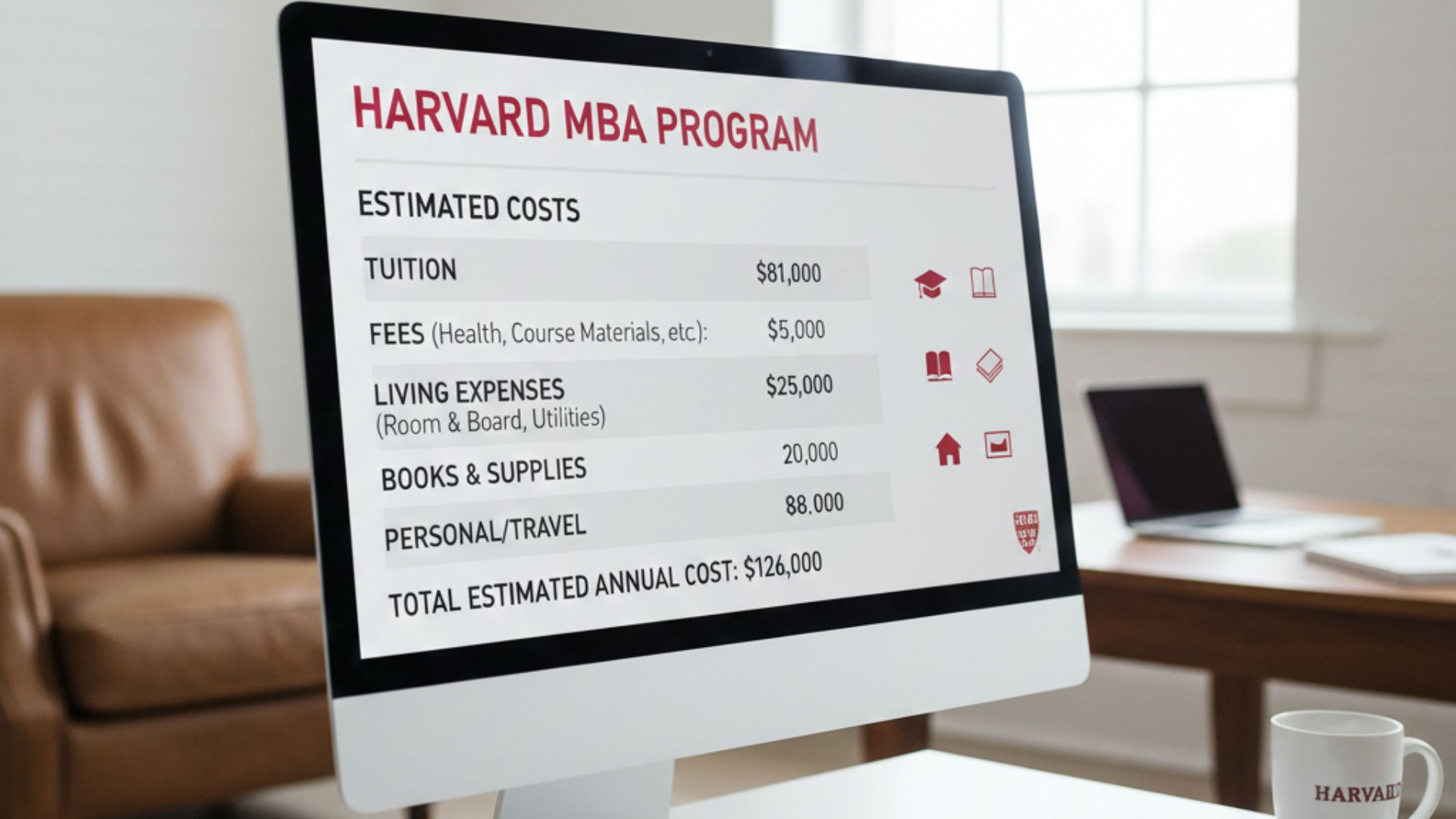
Cost of MBA Harvard: Harvard Business School (HBS) is one of the most prestigious business schools in the world. Its MBA program attracts thousands of applicants each year who aspire to build global careers, lead innovative companies, and make a meaningful impact in the business world. While the Harvard MBA opens doors to exceptional opportunities, one of the most important questions aspiring students ask is: What is the total cost of an MBA at Harvard?
The cost of pursuing an MBA at Harvard goes beyond the tuition fee. Students must also consider living expenses, health insurance, books, course materials, travel, housing, and personal expenses. This comprehensive guide will explain the cost of an MBA at Harvard in detail, help you understand all financial components, evaluate funding options, and assess the return on investment.
Whether you are a domestic or international applicant, this article will give you a clear, realistic understanding of what to expect financially when planning for an MBA at Harvard Business School.
Introduction: Why the Harvard MBA Is Expensive but Valuable?
Pursuing an MBA at Harvard is a major financial investment. The program is designed to provide students with access to world-class faculty, global business networks, case-based learning, leadership labs, and experiential learning opportunities. Graduates often experience significantly increased earning potential, faster career progression, global mobility, and high-profile roles across industries.
However, the investment required is substantial, and understanding the true cost is essential for proper planning.
The total cost of an MBA at Harvard typically includes:
- Tuition
- Program fees
- Health insurance
- Housing
- Food and groceries
- Transportation
- Books and course materials
- Computer and technology expenses
- Personal expenses
- Travel and miscellaneous costs
Let us dive into the detailed cost structure.
Harvard MBA Tuition Fee
The tuition fee is the largest component of the Harvard MBA cost. This fee covers:
- Classroom teaching
- Access to faculty
- Case study materials
- Use of the library and databases
- Campus facilities and student services
The tuition fee generally increases each academic year, following inflation and program improvements.
Estimated Total Cost of Harvard MBA (Two-Year Program)
Although exact numbers may vary slightly each year, the typical cost breakdown includes:
A. Tuition Fees
Harvard MBA tuition for one academic year is one of the highest among all business schools. Over two years, tuition is the single largest expense.
B. Health Insurance
Harvard requires all students to have health insurance. Students can choose Harvard’s plan or provide proof of external coverage.
C. Living Expenses
Living costs in Boston and Cambridge are higher than many other cities. Students must factor in rent, utilities, food, and transportation.
D. Course Materials and Technology
MBA students rely heavily on laptops, study resources, case papers, and software.
E. Travel and Field Projects
HBS encourages involvement in global projects, fieldwork, and networking events. These expenses vary by student but can add significantly to total costs.
Breakdown of Estimated Annual Expenses
Below is a detailed overview of what a typical student may spend during each year of the MBA program. Numbers are approximate and can vary based on personal lifestyle choices.
1. Tuition Fee
This is the primary cost for each year of the program.
2. Program Fee
Covers mandatory student services and academic resources.
3. Health Insurance
Mandatory coverage for all enrolled students.
4. Room and Housing
Many students live in Harvard’s on-campus housing or nearby apartments in Cambridge.
5. Food and Personal Expenses
Includes groceries, dining, laundry, internet, utilities, and personal care.
6. Transportation
Includes public transport, student shuttle services, ride-sharing, and occasional airfare.
7. Books and Case Materials
HBS uses case-based learning, requiring students to buy case packets for each course.
8. Miscellaneous Expenses
Covers event fees, clubs, conferences, global trips, and social activities.
Cost of Living in Cambridge/Boston
Cambridge and Boston are among the most expensive student cities in the United States due to high demand for housing, food, and transportation. Students should plan accordingly.
A. Housing Costs
Most students spend a substantial portion of their monthly budget on rent. On-campus housing may be comparatively affordable, but availability is limited.
B. Food Costs
Eating out is expensive in Boston. Cooking at home can reduce costs, but groceries are also priced higher than the US average.
C. Transportation Costs
Students who live near campus may not need a car. Boston has good public transport, but many students also use ride-sharing services.
D. Winter Clothing
International students may need to invest in winter clothing due to cold weather.
Additional Costs MBA Students Must Consider
While direct expenses form the bulk of costs, other hidden or optional expenses may arise:
1. Laptop and Technology
Students require a high-performance laptop capable of handling analytical tools and case-study software.
2. Exchange Programs
HBS offers international exchange opportunities. Travel and lodging must be self-funded.
3. Club and Conference Fees
Professional clubs often charge membership fees. Conferences also involve costs.
4. Networking Events
Social events, business meet-ups, and networking trips may add to overall expenses.
5. Graduation Costs
Gown rental, photographs, and ceremony participation involve additional charges.
Scholarships, Fellowships, and Financial Aid
Although the Harvard MBA is expensive, the school provides various funding options to ensure affordability.
A. Need-Based Financial Aid
Harvard offers need-based financial aid rather than merit-based awards.
Eligibility depends on:
- Family income
- Family assets
- Personal savings
- Educational background
- Other financial obligations
B. Fellowships
Many fellowships cover:
- Tuition
- Partial tuition
- Living expenses
- Travel
- Research
C. Loans
Students can access:
- Harvard-backed loan programs
- Federal loans (for US citizens)
- Private educational loans
D. Employer Sponsorship
Some students receive partial or full sponsorship from their employers. This is more common for mid-career professionals.
E. External Scholarships
Eligible students can apply for scholarships from:
- International foundations
- Home-country governments
- Corporate scholarship programs
Financial aid significantly reduces the cost burden for many students.
Is the Harvard MBA Worth the Cost? (ROI Analysis)
Despite its high cost, the Harvard MBA is considered one of the best investments in business education globally. Here is why:
A. Higher Salary After Graduation
Harvard MBA graduates often receive lucrative job offers across consulting, finance, technology, healthcare, and entrepreneurship.
B. Global Recognition
The Harvard MBA brand carries tremendous value, giving graduates a competitive advantage worldwide.
C. Alumni Network
Harvard has over 100,000+ business alumni across the world. Access to such a powerful network significantly improves career opportunities.
D. Career Opportunities
Graduates enter high-impact roles such as:
- Strategy consultants
- Investment bankers
- Product managers
- Venture capitalists
- Private equity analysts
- Startup founders
- C-suite executives
E. Personal Growth
The program develops leadership, critical thinking, decision-making, and global perspective.
F. Entrepreneurial Potential
HBS supports students who want to launch startups, providing incubators, mentorship, seed funding, and industry connections.
Overall, the return on investment is substantial and long-term.
Cost Comparison With Other Top MBA Programs
Harvard MBA costs are similar to:
- Stanford Graduate School of Business MBA
- University of Pennsylvania Wharton School MBA
- MIT Sloan School of Management MBA
All these programs are premium and offer similar global career benefits.
However, Harvard’s strong need-based funding makes it accessible to diverse students.
Important Links and Information
Below is a table summarizing important categories and where students can find more details. (No external URLs provided as requested.)
| Category | Description | Where to Find |
|---|---|---|
| Harvard MBA Tuition Fees | Annual tuition structure | Visit Harvard Business School official website |
| Financial Aid | Need-based scholarships and fellowships | Harvard MBA admissions financial aid page |
| Program Details | Curriculum, electives, and requirements | Harvard MBA program overview |
| Housing Information | On-campus housing options | Harvard Housing portal |
| Application Deadlines | Round 1, Round 2, and deferred MBA deadlines | HBS admissions page |
| Student Health Insurance | Mandatory coverage details | Harvard University health services |
| Career Outcomes | Salary reports and hiring statistics | HBS career and professional development office |
FAQ about Cost of MBA Harvard
How much does a Harvard MBA cost in total?
The total cost includes tuition, housing, food, materials, health insurance, and personal expenses. Over two years, the total investment is significant but varies based on lifestyle and financial aid.
Does Harvard offer scholarships for MBA students?
Yes. Harvard offers generous need-based scholarships and fellowships but does not offer merit-based scholarships.
Do international students pay more?
International and domestic students pay the same tuition. However, living expenses may differ based on personal choices.
Are loans available for international students?
Yes. Harvard works with global loan providers to offer loans without a US co-signer.
Is it possible to work part-time during the Harvard MBA?
Due to the intensive program structure, part-time work during the academic year is limited. Some students work during summer internships.
How expensive is living in Boston for MBA students?
Boston is a costly city. Housing, food, and transportation are higher than the national average.
Can a Harvard MBA be done online?
No. The Harvard MBA is strictly an on-campus, full-time program.
Is the Harvard MBA worth the money?
Yes. For most graduates, the salary growth, global opportunities, and network justify the investment.
Are there additional hidden costs?
Expenses for travel, conferences, technology, and networking may increase overall costs.
Does Harvard require a specific academic background?
No. Students come from engineering, commerce, arts, science, medicine, and other backgrounds.
Conclusion
The Harvard MBA is one of the most prestigious and influential business degrees in the world. While the cost of pursuing the program is substantial, the long-term benefits often outweigh the financial burden. The total cost of an MBA at Harvard includes tuition fees, living expenses, books, health insurance, and personal costs, but students from diverse financial backgrounds can access generous need-based aid, fellowships, and loans.
For many graduates, the Harvard MBA experience transforms their professional and personal lives. It builds leadership, network connections, business acumen, and confidence. Whether you aim to enter consulting, finance, technology, entrepreneurship, or corporate leadership, the Harvard MBA remains a powerful stepping stone to global opportunity.
If you are committed, passionate, and ready to invest in your future, the Harvard MBA can be one of the most rewarding decisions you will ever make.