
The Isabella Stewart Gardner Museum stands as one of Boston’s most enchanting and culturally significant landmarks. More than just a museum, it is a story of passion, art, and mystery — an enduring reflection of the extraordinary woman whose vision created it. From its Venetian-inspired architecture to its collection of rare masterpieces, the museum continues to capture the imagination of visitors and scholars alike.
This article explores the history, architecture, art collection, infamous theft, and cultural influence of the Isabella Stewart Gardner Museum, providing a complete guide to understanding its significance in American art and history.
The Visionary Behind the Museum: Isabella Stewart Gardner
Isabella Stewart Gardner was born in New York City in 1840 and later married John Lowell Gardner Jr., a member of a prominent Boston family. A woman of wealth, intellect, and boundless curiosity, Isabella developed an early passion for art and travel.
Her journeys across Europe introduced her to the Renaissance masters, the Venetian lifestyle, and the grandeur of old-world culture. Inspired by these experiences, she began collecting art with a vision — to create a museum that would educate, inspire, and provide aesthetic pleasure to the public.
By the late 1800s, she had acquired an impressive array of paintings, sculptures, tapestries, manuscripts, and rare books. Determined to share her treasures, Isabella personally oversaw the design and construction of her museum, ensuring every detail reflected her taste and artistic philosophy.
The Creation of Fenway Court
The Isabella Stewart Gardner Museum, originally named Fenway Court, was completed in 1902. Gardner chose a plot of land in Boston’s Back Bay Fens, transforming it into a Venetian palace that blended art, architecture, and nature.
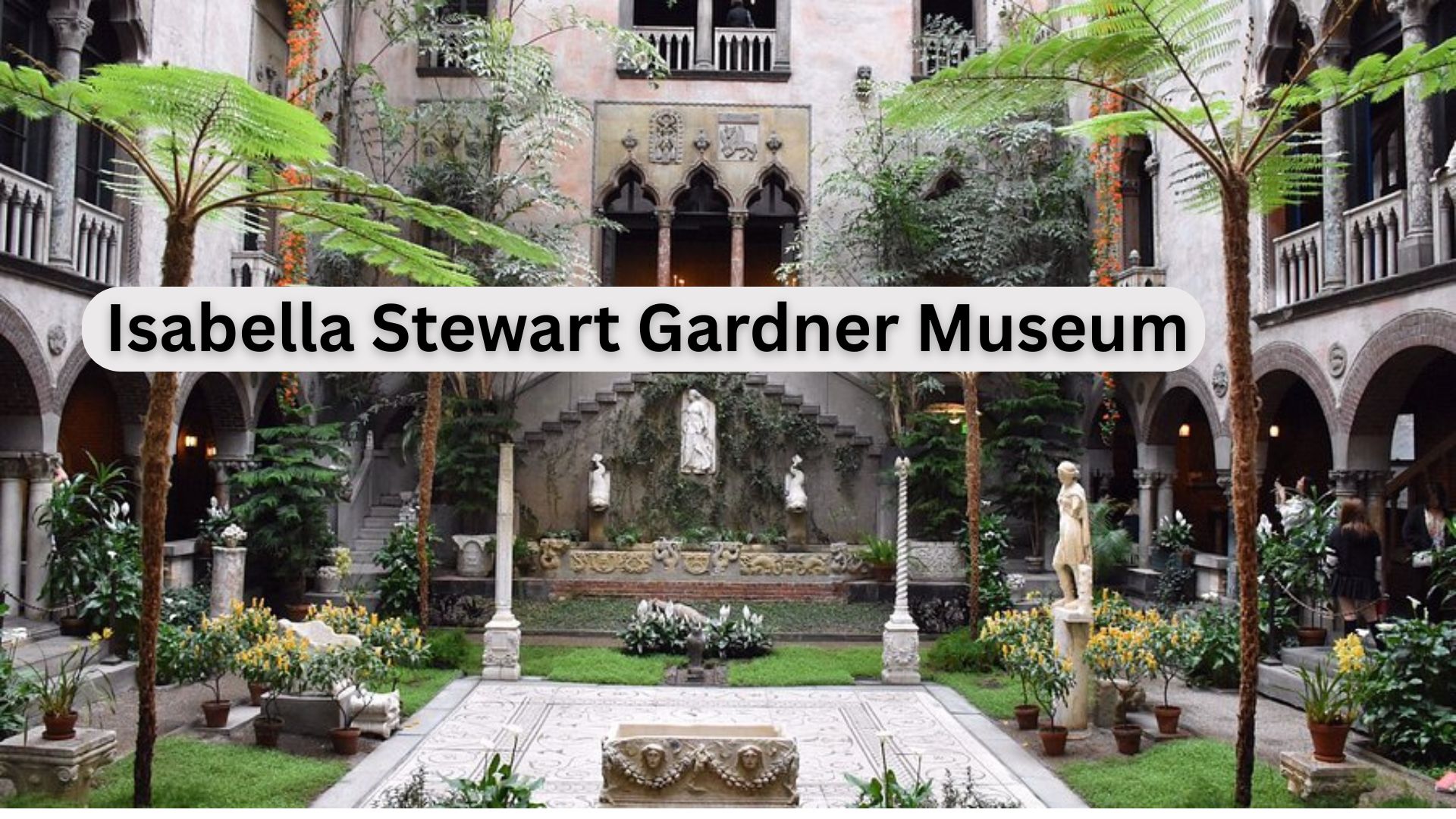
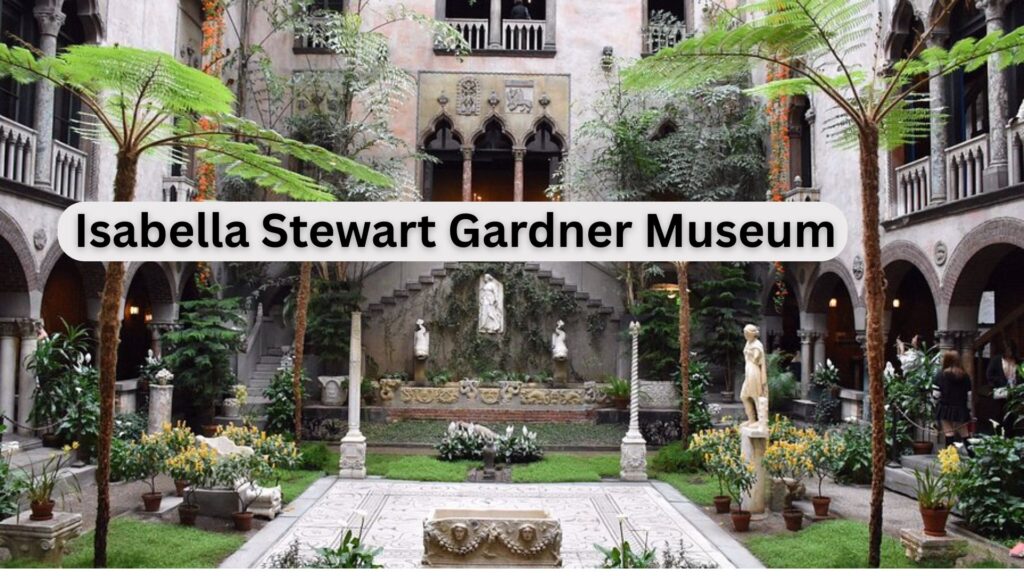
The museum’s architecture was inspired by 15th-century Venetian palaces such as the Palazzo Barbaro, a favorite of Gardner’s during her European visits. The building features a central courtyard filled with lush gardens, arched windows, balconies, and mosaics that evoke the feeling of Italy.
Every room in the museum was designed by Gardner herself, arranged not by artistic period or medium but by aesthetic harmony. She used paintings, furniture, and textiles to create immersive environments that conveyed emotion and beauty.
On New Year’s Day, 1903, the museum officially opened to the public with a grand celebration of music and art — a fitting tribute to its founder’s vision.
The Art Collection: A Treasure of Global Heritage
The Isabella Stewart Gardner Museum’s collection includes more than 7,500 paintings, sculptures, furniture pieces, rare books, and archival materials. It spans cultures and centuries, from ancient Rome to the Italian Renaissance, from Asian art to American modernism.
Highlights of the Collection
- The Concert by Johannes Vermeer – One of the museum’s most famous works, now tragically missing due to the 1990 theft.
- The Rape of Europa by Titian – A masterful depiction of classical mythology and sensuality.
- El Jaleo by John Singer Sargent – A large, dynamic painting of a Spanish dancer that dominates its gallery.
- Portrait of a Man with a Medal by Sandro Botticelli – A Renaissance portrait celebrated for its realism and grace.
- Rembrandt’s Self-Portrait, Age 23 – One of the Dutch artist’s earliest and most captivating self-studies.
Gardner’s eclectic taste extended to decorative arts, manuscripts, and architectural fragments. She believed in the power of aesthetic experience rather than academic categorization — a principle that makes the museum uniquely personal and immersive.
The Infamous Art Heist of 1990
On March 18, 1990, the Isabella Stewart Gardner Museum became the scene of the largest unsolved art theft in history. Two men dressed as Boston police officers entered the museum in the early morning hours, subdued the guards, and made off with thirteen works of art valued at over $500 million.
Stolen Masterpieces Included:
- Vermeer’s The Concert
- Rembrandt’s Storm on the Sea of Galilee
- Rembrandt’s A Lady and Gentleman in Black
- Degas’ sketches and other works
- Manet’s Chez Tortoni
To this day, none of the stolen art has been recovered, and the empty frames remain hanging on the walls, as instructed by Gardner’s will. These empty spaces serve as haunting reminders of what was lost — and symbols of hope that the masterpieces may one day return.
The museum offers a $10 million reward for information leading to the recovery of the stolen works, making this one of the most enduring mysteries in art history.
The Gardner’s Will and the Museum’s Rules
Isabella Stewart Gardner left detailed instructions in her will regarding the operation of her museum. She stated that nothing in the collection or the arrangement of the rooms could be changed. If this condition were violated, her entire estate was to be sold, and the proceeds donated to Harvard University.
This stipulation has preserved the museum’s original charm — a living time capsule reflecting Gardner’s vision. However, it also created challenges for curators and conservationists who must balance preservation with accessibility and education.
In 2012, to protect and enhance the original structure, the museum opened a modern addition designed by Italian architect Renzo Piano. The new wing provides space for concerts, exhibitions, and visitor amenities while leaving Gardner’s original palace untouched.
Educational Programs and Cultural Impact
The Isabella Stewart Gardner Museum continues to be a center of cultural education and artistic innovation. It offers a wide range of programs, including:
- Artist-in-Residence Programs: Supporting contemporary artists through residencies and exhibitions.
- Music and Performance Events: Continuing Gardner’s tradition of live concerts and performances.
- Educational Workshops and Lectures: Engaging students, educators, and the public in art and history.
- Community Outreach: Encouraging participation from diverse communities across Boston.
The museum’s programs embody Gardner’s philosophy — that art should inspire creativity, conversation, and curiosity.
Architecture and the Courtyard Experience
Perhaps the most breathtaking feature of the museum is its central courtyard. Filled with flowers, Roman statues, and fountains, it creates a serene and contemplative environment for visitors. Seasonal plantings ensure the courtyard remains alive year-round — from orchids in winter to ferns in summer.
Each gallery overlooks this courtyard, blending nature and art in a harmonious rhythm. This design reflects Gardner’s belief that beauty exists in the interplay of light, architecture, and human experience.
Visiting the Isabella Stewart Gardner Museum
The museum is located at 25 Evans Way, Boston, Massachusetts, near the Museum of Fine Arts. Visitors can easily access it by public transportation, car, or on foot from downtown Boston.
Tickets can be purchased online or on-site, and discounts are available for students, seniors, and children. Notably, admission is free for anyone named Isabella, honoring the founder’s legacy in a whimsical tradition.
Important Links and Information
| Information | Details |
|---|---|
| Museum Name | Isabella Stewart Gardner Museum |
| Address | 25 Evans Way, Boston, MA 02115, United States |
| Founded By | Isabella Stewart Gardner |
| Year Opened | 1903 |
| Architectural Style | Venetian Renaissance |
| Notable Works | Vermeer’s The Concert, Titian’s The Rape of Europa, Sargent’s El Jaleo |
| Art Theft Date | March 18, 1990 |
| Missing Works | 13 pieces valued over $500 million |
| Architect (New Wing) | Renzo Piano |
| Visitor Tip | Free admission for anyone named “Isabella” |
| Official Website | www.gardnermuseum.org |
| Contact Number | (617) 566-1401 |
| Museum Type | Art Museum and Historic Landmark |
Legacy of Isabella Stewart Gardner
Isabella Stewart Gardner’s legacy extends far beyond her museum walls. She challenged societal expectations, championed the arts, and built a haven where creativity thrives. Her daring spirit, intellectual curiosity, and aesthetic courage continue to inspire artists, historians, and everyday visitors.
In a world where art often becomes institutionalized, the Gardner Museum remains deeply personal. It invites visitors to feel as if they are entering someone’s home — because in essence, they are.
Every tapestry, sculpture, and floral arrangement tells the story of a woman who believed art could elevate the human spirit.
The Gardner Heist’s Cultural Impact
The 1990 heist has become a subject of books, documentaries, and podcasts. It remains one of America’s most enduring mysteries and has drawn widespread attention to the museum itself.
While the crime represents loss, it has also immortalized the Gardner in popular culture, ensuring that its story continues to fascinate generations.
The museum’s partnership with the FBI and other international agencies keeps the case alive. Periodically, new leads emerge, renewing hope that the missing masterpieces might someday return home.
FAQ about Isabella Stewart Gardner Museum
Who was Isabella Stewart Gardner?
Isabella Stewart Gardner was a philanthropist, art collector, and socialite from Boston who founded the museum that bears her name. Her passion for art and travel shaped the museum’s vision and design.
What is the significance of the Gardner Museum’s architecture?
The museum is modeled after Venetian palaces, blending art, architecture, and nature. Its central courtyard and galleries reflect Gardner’s desire to create an intimate and immersive art experience.
What happened during the 1990 art theft?
In 1990, two thieves disguised as police officers stole 13 artworks valued at over $500 million. The case remains unsolved, and the empty frames are still displayed in the museum.
Can visitors still see the stolen paintings?
No, the stolen paintings have never been recovered. However, their empty frames remain on the walls as a tribute to their absence and hope for their return.
How can I visit the museum?
You can visit the Isabella Stewart Gardner Museum in Boston, Massachusetts. Tickets are available online or at the museum. Admission is free for anyone named Isabella.
What are some must-see artworks?
Visitors should not miss El Jaleo by John Singer Sargent, The Rape of Europa by Titian, and Rembrandt’s Self-Portrait, Age 23.
Conclusion
The Isabella Stewart Gardner Museum is not merely an art gallery; it is a living, breathing embodiment of one woman’s vision and the timeless power of art. From its Venetian-inspired architecture to its mysterious history, the museum invites visitors to step into a world where beauty transcends time and tragedy.
Its story — a blend of genius, generosity, and intrigue — continues to resonate with those who believe that art can transform lives. Whether you visit for the masterpieces, the courtyard, or the lingering mystery of the heist, the Gardner Museum offers an unforgettable journey through creativity, history, and human spirit.