
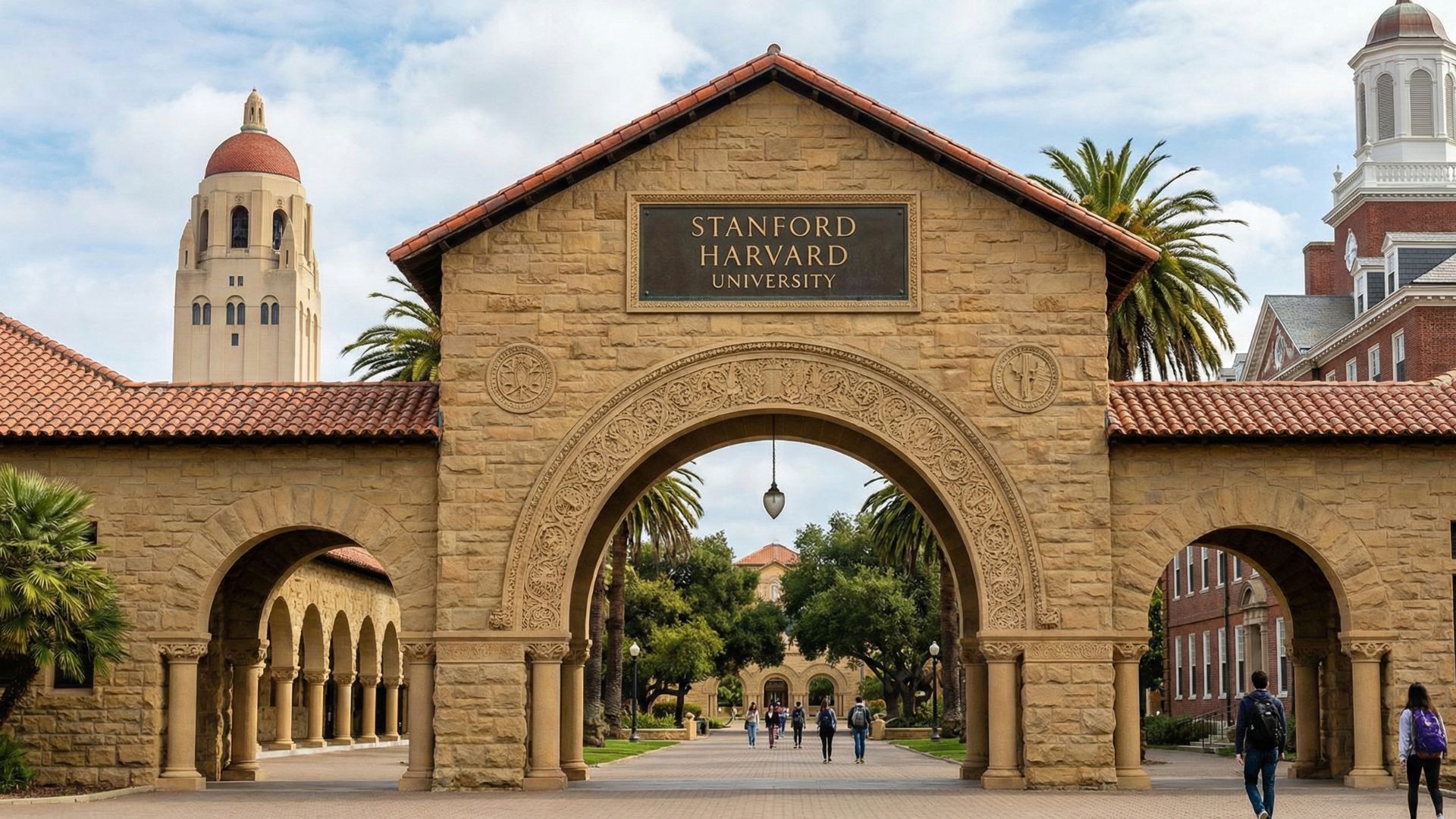
Stanford Harvard: When people think of the most prestigious universities in the world, two names immediately surface: Stanford University and Harvard University. These institutions have shaped global education, research, innovation, leadership, and technological advancement for decades. While Harvard is known for its centuries-old academic excellence and leadership in law, public policy, and liberal arts, Stanford is synonymous with Silicon Valley, entrepreneurship, and breakthrough innovations in technology and science.

Comparing Stanford and Harvard is not simply a matter of ranking; it is about understanding two entirely different academic cultures, histories, environments, and philosophies. Students often ask which one is better, which one offers stronger opportunities, and which institution aligns with their long-term goals. This article dives deep into all critical aspects of the Stanford vs Harvard debate, offering a detailed, balanced, and thorough exploration for prospective students, parents, educators, and researchers.
Overview of Stanford and Harvard
Before diving into comparisons, it is important to understand each university’s identity and historical significance.
Harvard University: A Legacy of Centuries
Founded in 1636, Harvard is the oldest institution of higher education in the United States. It is located in Cambridge, Massachusetts, and is recognized globally for its excellence in:
- Law
- Business
- Medicine
- Social sciences
- Public policy
- Liberal arts
- Education
- Government and international relations
Harvard’s prestige stems from its long history, tradition of producing world leaders, and its enormous global influence in scholarship and public affairs.
Stanford University: The Heart of Silicon Valley
Established in 1885, Stanford University is located in Stanford, California, in the center of Silicon Valley. Known for its entrepreneurial culture, Stanford is a powerhouse in:
- Engineering
- Computer science
- Business and management
- Technology and innovation
- Sciences and mathematics
- Startups and venture capital
Many of the world’s biggest tech companies trace their roots to Stanford, either through alumni or research partnerships.
Stanford vs Harvard: A Detailed Comparative Analysis
This section examines every major difference and similarity between the two universities.
1. Academics and Faculty Excellence
Harvard’s Academic Strengths
Harvard excels in programs that require strong grounding in:
- Law (Harvard Law School)
- Public policy (Harvard Kennedy School)
- Business (Harvard Business School)
- Medicine (Harvard Medical School)
- Humanities and Social Sciences
- Psychology
- Biology
- Economics
Harvard’s faculty includes Nobel laureates, Pulitzer Prize winners, business leaders, and globally influential thinkers.
Stanford’s Academic Strengths
Stanford’s strongest academic domains include:
- Engineering
- Computer Science
- Artificial Intelligence
- Business (Stanford Graduate School of Business)
- Mathematics
- Neuroscience
- Environmental sciences
- Innovation and Technology
Stanford professors are pioneers in technical research, scientific discovery, and entrepreneurship.
2. Campus Culture and Student Life
Harvard’s Culture
Harvard is known for its:
- Traditional academic environment
- Intense intellectual culture
- Strong emphasis on debate and analysis
- Networking focused on law, business, policy, and research
- Historic traditions and student organizations
Harvard students engage deeply in politics, journalism, business clubs, and academic societies.
Stanford’s Culture
Stanford, in contrast, is characterized by:
- A relaxed and collaborative atmosphere
- Strong push for innovation and creative problem-solving
- Close ties with the tech industry
- Entrepreneurial mindset and start-up culture
- Outdoor and athletic activities due to California’s climate
Stanford students often participate in hackathons, innovation labs, start-up incubators, and tech-driven competitions.
3. Admissions: Which is Harder?
Both institutions are extremely selective with acceptance rates below 5 percent in most cycles. Admission depends on:
- Academic excellence
- Standardized test scores (if submitted)
- Extracurricular achievements
- Leadership qualities
- Strong personal essays
- Teacher recommendations
General Observation
- Harvard admissions emphasize intellectual depth, global awareness, leadership, and academic research potential.
- Stanford admissions emphasize creativity, innovation, personal passion, individuality, and future impact.
Neither is “easier,” but each looks for different qualities.
4. Tuition and Financial Aid
Both Stanford and Harvard have similar tuition fees, but both offer generous financial aid, especially for students from moderate or low-income backgrounds.
Harvard’s Financial Aid System
Harvard ensures that students from families with lower income can study with reduced or no tuition fees. Many students graduate without significant debt.
Stanford’s Financial Aid System
Stanford likewise provides strong financial aid packages and offers full support for students with demonstrated financial need.
Harvard has a larger endowment, but Stanford’s location and industry partnerships help support its students in other ways.
5. Career Opportunities and Future Prospects
Harvard Alumni Outcomes
Harvard graduates frequently move toward:
- Law
- Business leadership
- Government roles
- Academia
- Medicine
- Public policy
- Finance
- Consulting
Harvard alumni dominate positions in global corporations, politics, research, and international institutions.
Stanford Alumni Outcomes
Stanford alumni excel in:
- Technology
- Software engineering
- Artificial Intelligence
- Entrepreneurship
- Engineering leadership
- Venture capital
- Design and product development
Stanford graduates often start or join high-impact companies, especially in Silicon Valley.
6. Location Advantages and Influence
Harvard: Cambridge, Massachusetts
Harvard benefits from proximity to:
- Boston’s academic environment
- Numerous research hospitals
- Government institutions
- Finance and consulting firms
It is ideal for students interested in law, medicine, research, public policy, business, and social sciences.
Stanford: Silicon Valley, California
Stanford’s biggest advantage is its location near:
- Apple
- Meta
- Tesla
- Startups
- Venture capital firms
- AI research labs
It is ideal for students who want to innovate, build companies, or work in the tech industry.
7. Research Opportunities
Both institutions lead global research output.
Harvard Research Strengths
Harvard is globally respected in:
- Public health
- Biomedical research
- Social sciences
- Neuroscience
- Law and governance
- Environmental policy
- Education and psychology
Stanford Research Strengths
Stanford excels in:
- Engineering
- Computer science
- Machine learning
- Robotics
- Aerospace
- Biotechnology
- Physics
Stanford’s strong partnerships enable students to participate in cutting-edge technology projects.
FAQ about Stanford Harvard
Is Stanford better than Harvard?
Neither university is strictly better; they excel in different fields. Stanford dominates in technology and engineering, while Harvard leads in law, medicine, business, and humanities. The best choice depends on the student’s career goals.
Which is harder to get into: Stanford or Harvard?
Both are extremely difficult to get into, with similar acceptance rates. Stanford is sometimes considered slightly more selective, but Harvard has more global applicants. Each university values different aspects in admissions.
Which university is better for business studies?
Harvard Business School is globally renowned for leadership development and corporate management. Stanford Graduate School of Business excels in entrepreneurship and innovation.
Is Harvard more expensive than Stanford?
Both universities have comparable tuition fees, but each offers generous financial aid. Many students pay significantly less than the listed cost thanks to scholarships and grants.
Which school is better for engineering and technology?
Stanford is considered the strongest in engineering, computer science, and technological innovation due to its close relationship with Silicon Valley.
Do both universities offer good research opportunities?
Yes, both Harvard and Stanford are world leaders in research across multiple disciplines. Students receive excellent opportunities to work on advanced projects.
Should I choose Stanford or Harvard for medicine?
Harvard Medical School is widely regarded as the best medical school in the world. Stanford also has an excellent medical program, but Harvard has a larger network of research hospitals.
Conclusion
The debate between Stanford and Harvard is not a question of which university is better, but rather which institution is better suited for an individual student’s academic and career aspirations. Harvard stands as a symbol of tradition, intellectual rigor, and leadership across law, medicine, business, social sciences, and public policy. Stanford represents innovation, entrepreneurship, and cutting-edge science, especially in engineering and computer technology.
Both universities offer world-class faculty, exceptional research opportunities, strong financial aid, and global career pathways. Choosing between them requires understanding one’s goals, learning environment preferences, and long-term ambitions.
In the end, both Harvard and Stanford remain unparalleled institutions that continue to shape the future of education, research, society, and global leadership.