

Harvard Deferral Rate: Applying to Harvard University is one of the most competitive processes in the world. Every year, thousands of top-performing high school students submit their applications in the hope of gaining admission to this prestigious institution. For many, the first round of responses comes through Harvard’s Early Action (EA) program. However, not all early applicants receive a straightforward yes or no. A significant portion of them are “deferred,” meaning their applications are pushed into the Regular Decision pool for consideration later. This process leaves many students struggling to understand what the Harvard deferral rate means and how it impacts their chances.
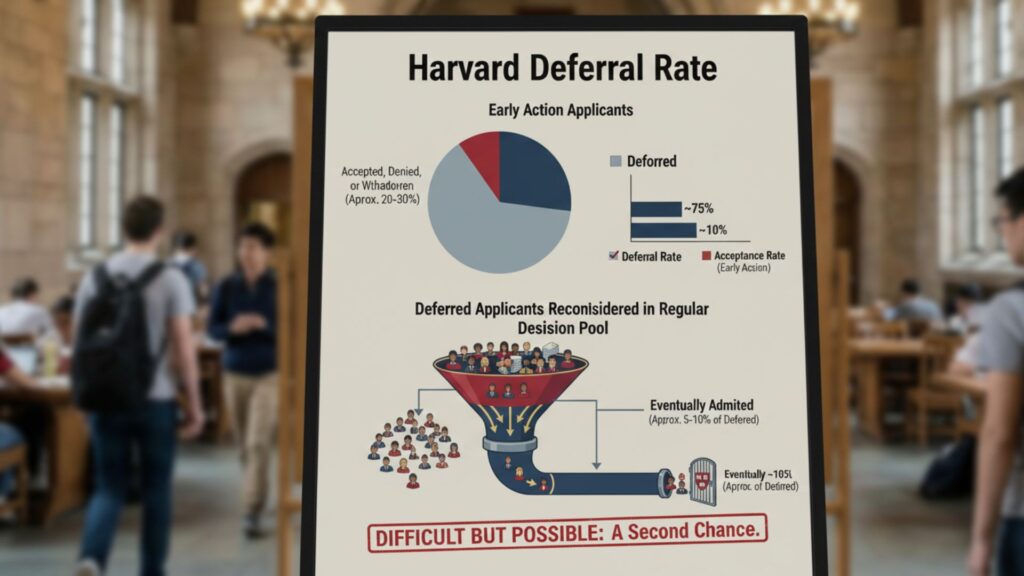
This article provides an in-depth explanation of the Harvard deferral rate, why it happens, what it means for applicants, how to improve your chances after being deferred, and what trends students can expect. Whether you are planning to apply early, are curious about admissions competitiveness, or want to understand what a deferral signifies, this guide will give you a clear, detailed understanding.
Understanding Harvard Early Action Admissions
Harvard follows a Single-Choice Early Action (SCEA) or Restrictive Early Action (REA) system. This means:
- Applicants submit their applications by early November.
- Harvard gives decisions in mid-December.
- Early applicants cannot apply early to other private universities.
- The decision is non-binding, so admitted students are not required to attend.
Harvard typically releases three possible outcomes to early applicants:
- Accepted
- Deferred to Regular Decision
- Denied
The deferral option is the middle ground, and it often leads to the greatest confusion. A deferred applicant has not been rejected; instead, they are given a second chance when the full applicant pool is reviewed.
What Is the Harvard Deferral Rate?
The deferral rate refers to the percentage of early applicants whose applications are not accepted or rejected outright but moved to the Regular Decision pool for reconsideration. This rate fluctuates from year to year based on the strength of the applicant pool, class size predictions, institutional priorities, and other factors.
Historically, Harvard has had one of the highest deferral rates among top universities. This is because Harvard prefers to postpone final decisions for many strong applicants until they can compare them with the larger Regular Decision pool.
Why Does Harvard Defer So Many Students?
Many applicants wonder why Harvard defers a large percentage instead of issuing more rejections. The reasons include:
1. The Strength of the Early Applicant Pool
Students who apply early are traditionally some of the strongest in the country. Harvard often wants the chance to compare them with the Regular Decision applicants before making a final choice.
2. Class Size Management
Harvard needs to balance how many students it admits early to avoid overfilling the freshman class. Deferring allows them to make more accurate decisions later.
3. Institutional Priorities
Harvard may defer applicants when waiting to finalize priorities such as financial aid commitments, diversity goals, athletic recruitment slots, or departmental needs.
4. Re-evaluation Opportunity
A deferral allows Harvard to request mid-year grades, updated achievements, and additional context that might strengthen or weaken the applicant’s profile.
5. Preserving Applicant Relationship
Rather than issuing a direct rejection, a deferral encourages capable students to stay engaged and motivated.
What Does Harvard Deferral Mean for Applicants?
A deferral is not a rejection. Instead, it means:
- Harvard sees strong potential in your file.
- They want to evaluate you again in March.
- Your application will receive another full review.
- You remain in competition with the entire Regular Decision pool.
Being deferred keeps your chances alive. Historically, many students who were deferred eventually gained admission.
Estimated Harvard Deferral Rate Trends
While exact numbers vary each year, Harvard has historically deferred around half or more of its early applicants. In many admissions cycles, the breakdown looked like this:
- A small percentage admitted early
- A substantial percentage deferred
- The remaining rejected
This high deferral rate demonstrates Harvard’s cautious approach to early admissions.
What Are the Chances of Getting In After Being Deferred?
While the number changes yearly, the acceptance rate for deferred applicants tends to be lower than for those admitted early. It is still possible but highly competitive.
Factors that improve your chances include:
- Strong mid-year grades
- New achievements such as awards, competitions, or leadership roles
- A concise and impactful letter of continued interest
- Demonstrating genuine commitment to attending Harvard
- Clear academic improvement
A deferral means Harvard believes you are qualified. The next step is strengthening your file.
What Should You Do After Being Deferred?
Being deferred can be stressful, but there are proactive steps you can take to improve your chances.
1. Submit a Letter of Continued Interest (LOCI)
This letter should:
- Express your continued desire to attend
- Update Harvard on your academic progress
- Highlight recent achievements
- Affirm why Harvard remains your top choice
It should be sincere, clear, and well-written.
2. Update Your Mid-Year Grades
Strong academic performance in senior year is crucial. Harvard places heavy emphasis on consistency and improvement.
3. Provide New Information or Achievements
If you have earned awards, completed projects, participated in competitions, or taken on leadership roles, share them with the admissions office.
4. Strengthen Your Academic Profile
Continue challenging yourself with rigorous coursework and maintain high performance. A drop in grades can negatively impact your reconsideration.
5. Stay Positive and Apply to a Balanced List of Schools
Continue focusing on other applications. Harvard is extremely competitive, so it is important to have several strong options.
Myths About the Harvard Deferral Process
Myth 1: A deferral means rejection
Reality: Many deferred students are admitted each year.
Myth 2: Harvard did not like your application
Reality: You are academically strong, but Harvard wants more information.
Myth 3: Sending extra materials helps
Reality: Only meaningful updates are helpful. Bombarding admissions with unnecessary documents can hurt your chances.
Myth 4: Deferral decisions are random
Reality: They are thoughtful and strategic based on institutional needs.
How Harvard Compares to Other Ivy League Deferral Rates?
Harvard is known for deferring a larger percentage of early applicants compared to some Ivy League schools. Reasons include stronger early pools and a more cautious admissions strategy.
While some Ivy institutions reject a large percentage early, Harvard prefers giving many students additional consideration.
Important Harvard Admissions Resources
Here is a table of important links and information relevant to Harvard admissions and understanding the deferral process.
| Topic | Description | Link |
|---|---|---|
| Harvard Admissions | Official undergraduate admissions portal | https://college.harvard.edu |
| Application Deadlines | Early Action and Regular Decision dates | https://college.harvard.edu/admissions |
| Financial Aid | Information on aid packages and policies | https://college.harvard.edu/financial-aid |
| Contact Admissions | Email and communication details | https://college.harvard.edu/contact-us |
| Harvard FAQ | General questions answered by Harvard | https://college.harvard.edu/faq |
What Students Can Expect if Deferred?
If you are deferred, Harvard will typically notify you of the next steps:
- Your application is automatically moved to Regular Decision.
- You may be asked for mid-year school reports.
- You may choose to submit additional materials that add value.
- Final decisions are released in late March.
Understanding this timeline helps students stay organized and proactive.
Tips to Improve Your Chances After a Deferral
1. Maintain Academic Excellence
Harvard closely reviews mid-year grades.
2. Demonstrate Growth
If you have improved academically, share it.
3. Showcase Leadership
Leadership roles demonstrate maturity and initiative.
4. Strengthen Your Personal Narrative
If you have developed a new passion, project, or community activity, highlight how it aligns with Harvard’s mission.
5. Submit Only Purposeful Updates
Sending unnecessary documents can weaken your application.
Common Mistakes Deferred Applicants Make
Avoid the following:
- Sending multiple emails to admissions
- Submitting irrelevant materials
- Asking teachers for more recommendation letters unnecessarily
- Stopping participation in extracurriculars
- Allowing grades to drop due to discouragement
A calm, proactive approach is best.
FAQ about Harvard Deferral Rate
What does being deferred from Harvard mean?
It means your application was not rejected or accepted early. It will be reconsidered in the Regular Decision round.
Is being deferred better than being rejected?
Yes. A deferral means you still have a chance to be admitted.
What percentage of deferred students get accepted?
While competitive and lower than early acceptance rates, a portion of deferred applicants are accepted every year.
Does Harvard defer most of its early applicants?
Harvard is known for having one of the highest deferral rates among top universities.
Should I submit a letter of continued interest?
Yes, especially if you have strong updates to share.
Will Harvard ask for mid-year grades?
Yes. They are an important factor in the final decision.
Can I submit new recommendation letters?
Only if they add significant value. Avoid overloading the admissions office.
Does a deferral hurt my chances?
A deferral does not end your chances, but acceptance from the deferred pool remains highly competitive.
Conclusion
The Harvard deferral rate is a reflection of the university’s competitive admissions process and its careful approach to shaping each incoming class. Being deferred can feel uncertain, but it is far from a rejection. It indicates that Harvard sees potential in your application and wants more time, context, or comparison before making a decision.
For students, the best response to a deferral is to stay committed to academic excellence, provide meaningful updates, and continue demonstrating leadership and passion. Understanding the process allows applicants to approach their deferral strategically rather than emotionally.
While Harvard remains one of the hardest schools in the world to gain admission to, a deferral is a second opportunity to make your case. Many students have turned a deferral into an acceptance through thoughtful persistence and genuine achievement.
If you or someone you know has been deferred, remember that the journey is not over. Harvard’s holistic review process ensures that every strong applicant receives full consideration, and with the right steps, you can still achieve your goal.