

Harvard Likely Letter: Gaining admission to Harvard University is one of the most competitive academic achievements in the world. Students from across the globe apply with exceptional academic records, leadership qualities, extracurricular involvement, and personal essays. In such a competitive environment, even applicants with near-perfect credentials often wonder about their chances. Amid this process, one term that frequently appears in admissions discussions is the Harvard Likely Letter.
A Harvard Likely Letter is one of the most fascinating elements of Ivy League admissions. It is rare, prestigious, and often misunderstood. Many students assume it is the same as an acceptance letter, while others believe it is a guaranteed path to Harvard. In reality, a Harvard Likely Letter has a very specific purpose, and understanding it can significantly help high-achieving students navigate the admissions journey.
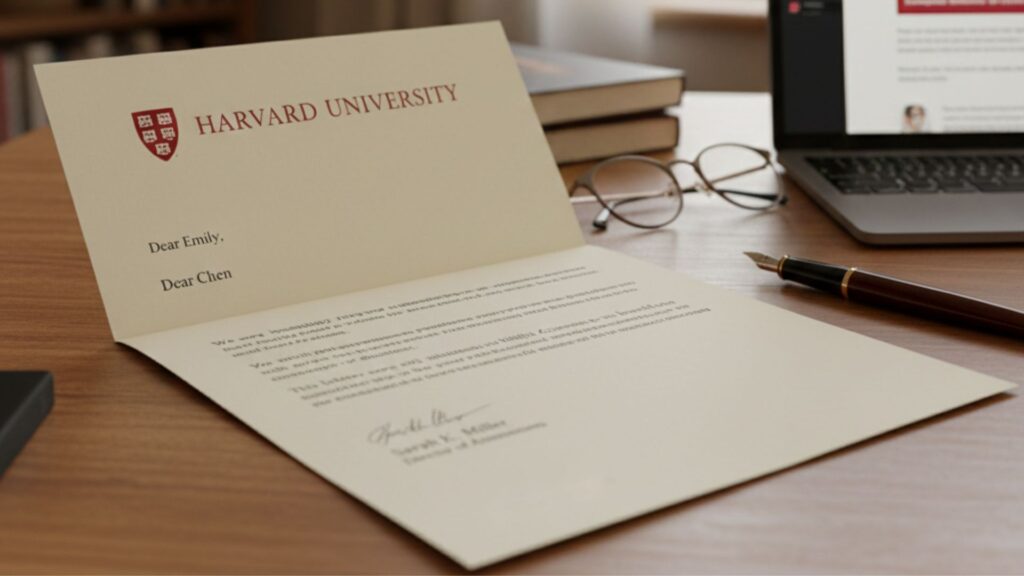
This article provides an in-depth explanation of what a Harvard Likely Letter is, how hard it is to receive one, who gets it, why Harvard sends it, and what students should do if they receive one. The discussion also covers myths, facts, timelines, and preparation strategies. By the end, you will have a clear understanding of this unique admissions practice.
What Is a Harvard Likely Letter?
A Harvard Likely Letter is a communication sent to a small number of exceptionally strong applicants, usually before the official admissions decisions are released. It is typically sent to reassure highly competitive candidates that they are very likely to be admitted when formal decisions are announced.
In simple terms, a Likely Letter serves as an early signal that the applicant stands out at the top of the pool. Although it is not an official offer of admission, the wording of the letter expresses strong confidence that the applicant will be accepted.
The idea behind Likely Letters originated within the Ivy League athletic conference. Colleges wanted a standardized method for communicating with top recruits. As the practice evolved, colleges began using Likely Letters for non-athlete applicants as well, particularly for those who demonstrate extraordinary academic strength, artistic talent, leadership, or rare achievements.
A Harvard Likely Letter is considered one of the strongest indicators of eventual admission. While not legally binding, historically, recipients are almost always admitted unless they experience a serious change in academic performance or conduct.
Why Harvard Sends Likely Letters?
Harvard receives tens of thousands of applications each year. Many applicants are not only strong on paper but are also being recruited by multiple prestigious universities. Likely Letters help Harvard secure the interest of these top students.
The main reasons Harvard sends Likely Letters include:
1. Competition for Top Talent
Exceptional students often apply to multiple Ivy League and top-tier colleges. Harvard wants to reassure these candidates early to prevent losing them to peer institutions.
2. Recognition of Outstanding Achievement
Students with world-class accomplishments in academics, arts, research, or community leadership sometimes receive Likely Letters as a form of acknowledgement.
3. Athletic Recruitment
Harvard coaches may support student-athletes who are significant contributors to their teams. Likely Letters ensure these athletes feel confident in enrolling.
4. Yield Management
Yield is the percentage of admitted students who choose to enroll. By providing early positive signals, Harvard increases the probability that top candidates will ultimately join.
5. Encouraging Continued Engagement
A Likely Letter may encourage students to attend admitted-student programs, stay engaged with admissions, or continue communicating with departments of interest.
Who Typically Receives Harvard Likely Letters?
Harvard Likely Letters are extremely rare. Only a small fraction of applicants receive them. Those who do usually fall into one or more of the following categories:
1. Top Academic Performers
This includes students with exceptional academic records, perfect or near-perfect standardized test scores (if submitted), rigorous course loads, and evidence of intellectual distinction.
2. Recruited Athletes
A large percentage of Likely Letters are sent to student-athletes who have been recruited by Harvard’s athletic programs. These letters help secure commitments before official admission.
3. Students with National or International Achievements
This category may include:
- National Olympiad medalists
- Published researchers
- National debate champions
- International science fair winners
- Accomplished artists or performers
4. Students with Rare and Exceptional Leadership Profiles
Harvard values leadership that demonstrates initiative, impact, and sustained commitment.
5. Students from Underrepresented Backgrounds
Harvard aims to maintain a diverse student body. Exceptional students from underrepresented groups may be recognized early through a Likely Letter.
When Harvard Sends Likely Letters?
Harvard typically sends Likely Letters between:
Mid-February to Early March
These letters are usually issued before the official regular decision release in late March or early April. The timing allows Harvard to reassure students early enough while still adhering to the Ivy League admissions guidelines.
For recruited athletes, Likely Letters may be sent even earlier, depending on the recruitment timeline and coach recommendations.
How Hard Is It to Receive a Harvard Likely Letter?
Receiving a Harvard Likely Letter is extremely rare. Only a very small number of students in the applicant pool receive them. Estimates often suggest that fewer than 1 to 2 percent of applicants receive a Likely Letter. The competition is fierce because Harvard uses Likely Letters only for the most outstanding candidates.
Factors influencing the likelihood include:
1. Academic Excellence
Extraordinary academic performance is almost always required.
2. Unique Achievements
Students with uncommon accomplishments or national-level distinction have higher chances.
3. Strong Institutional Fit
Harvard considers whether a student brings something irreplaceable to the class.
4. Support from Harvard Faculty or Coaches
Especially for research-oriented candidates or athletes, direct support can influence the decision.
5. Consistent Excellence Across All Areas
Harvard looks for students who are strong not just academically but also in character, leadership, extracurricular involvement, and personal qualities.
What to Do if You Receive a Harvard Likely Letter?
Receiving a Likely Letter is a significant and exciting achievement, but it also comes with responsibility. Here are the recommended steps:
1. Maintain Academic Performance
A Likely Letter does not guarantee final admission if grades drop significantly.
2. Keep in Contact with Admissions
If the letter suggests you attend virtual or in-person programs, take advantage of these opportunities.
3. Continue Demonstrating Good Conduct
Harvard evaluates character and integrity. Any disciplinary issues can endanger your final admission.
4. Use the Time to Explore Harvard Further
Attend campus tours, research opportunities, and student meetings to prepare for potential enrollment.
5. Be Patient Until the Official Decision
Wait for the formal acceptance in March or April. The Likely Letter is not a replacement for the official admission.
Difference Between a Likely Letter and an Acceptance Letter
| Feature | Harvard Likely Letter | Harvard Official Acceptance |
|---|---|---|
| Purpose | Early signal of strong confidence | Official and binding admission offer |
| Timing | Usually February or early March | Late March or early April |
| Guarantee | Not legally binding, but nearly certain | Legally valid offer of enrollment |
| Used For | Top academic talent, recruited athletes, exceptional candidates | All admitted applicants |
| Communication Style | Expresses high likelihood of admission | Confirms acceptance to Harvard |
Important Links and Information
| Category | Details | Link / Information |
|---|---|---|
| Harvard Undergraduate Admissions | Official information on applications | https://college.harvard.edu |
| Harvard Financial Aid | Cost, scholarships, and aid programs | https://college.harvard.edu/financial-aid |
| Harvard Athletics | Recruitment information for student-athletes | https://gocrimson.com |
| Harvard Academic Programs | Overview of available programs | https://college.harvard.edu/academics |
| Harvard Student Life | Campus life and housing | https://college.harvard.edu/student-life |
Common Myths About Harvard Likely Letters
Myth 1: Everyone strong gets a Likely Letter.
Only a tiny percentage of top students receive it. Many strong applicants are admitted without any early communication.
Myth 2: A Likely Letter guarantees admission.
While extremely predictive, it is not a formal admission.
Myth 3: Only athletes receive Likely Letters.
Athletes are a significant group, but exceptional academic and artistic students also receive them.
Myth 4: It increases chances more than an acceptance letter.
Nothing increases your chances more than receiving an actual acceptance.
Myth 5: Not getting a Likely Letter means you will be rejected.
Most admitted students do not receive Likely Letters.
Tips for Increasing Your Chances
A Likely Letter cannot be requested, but students can improve their chances of standing out through:
1. Pursuing Advanced Academic Work
High-level coursework and strong standardized scores help.
2. Building a Unique Achievement Portfolio
National competitions, Olympiads, publications, and significant projects can stand out.
3. Excellent Essays
Essays should be thoughtful, original, and reflective of personal values.
4. Strong Recommendations
Teachers who know your strengths well can significantly support your application.
5. Leadership and Impact
Quality is valued over quantity. Harvard looks for real contributions and meaningful engagement.
6. Initiative and Purpose
Harvard values students who show long-term dedication and clear goals.
FAQ about Harvard Likely Letter
Is a Harvard Likely Letter the same as being admitted?
No. A Likely Letter signals very high confidence but is not an official acceptance.
Do all Ivy League schools send Likely Letters?
Yes, but the number and timing vary by institution.
Do Likely Letters help in athletic recruitment?
Yes. Many recruited athletes receive them to finalize the admissions process.
Do Likely Letters ever get revoked?
They can be withdrawn if academic performance drops or if there are disciplinary issues.
If I do not receive a Likely Letter, should I worry?
No. Most admitted students do not receive one.
Can international students receive a Harvard Likely Letter?
Yes, international students with exceptional achievements are eligible.
Does early action increase the chances of receiving a Likely Letter?
Not necessarily. Likely Letters are mostly for regular decision applicants.
Does a Likely Letter impact financial aid?
No. Financial aid decisions are separate.
How many Likely Letters does Harvard send each year?
Harvard does not publish exact numbers, but the total is very small.
Can a Likely Letter be declined?
You cannot decline it, but you may still choose not to enroll after official admission.
Conclusion
A Harvard Likely Letter is one of the strongest signs that an applicant is performing at the highest level of the admissions pool. It represents outstanding achievement, unique qualities, and significant institutional interest from Harvard University. Although it is not an official acceptance, it almost always leads to final admission unless major issues arise.
Understanding the purpose, criteria, and process behind Likely Letters helps students and parents make sense of this rare communication. Whether you receive a Likely Letter or not, it is important to remember that Harvard’s admissions process evaluates a broad range of qualities and accomplishments. Many tremendously talented students are admitted every year without receiving a Likely Letter.
The best approach is to focus on excellence, authenticity, and meaningful engagement. Whether your goal is a Likely Letter or a final offer of admission, sustained commitment and genuine curiosity remain the strongest pathways toward earning a place at Harvard.