
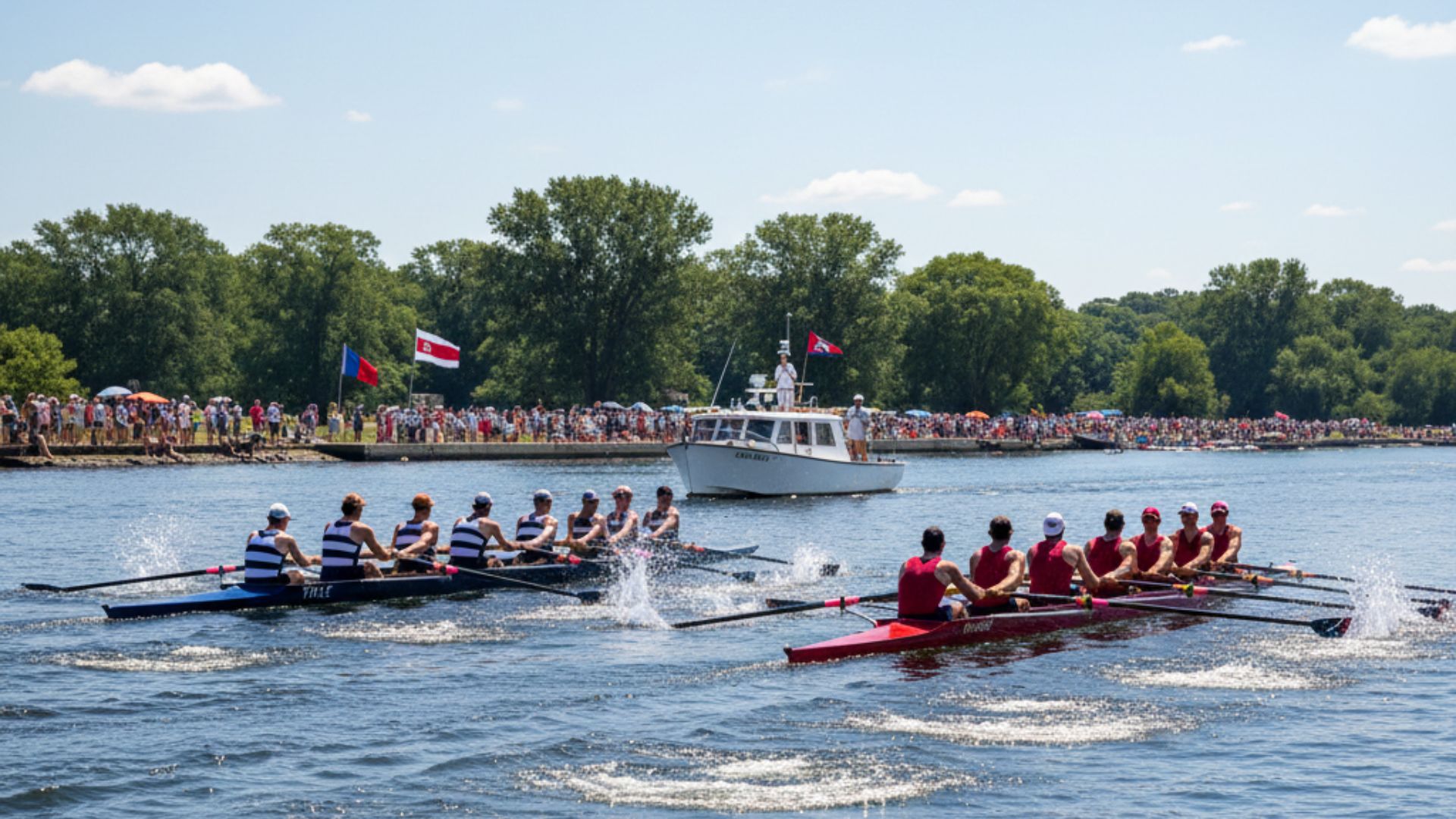
Yale Harvard Boat Race: The Yale–Harvard Boat Race is one of the oldest and most celebrated college athletic traditions in the United States. More than just a rowing competition, this annual event represents a century-and-a-half-long rivalry, sportsmanship, tradition, and historical continuity between two of the world’s most prestigious universities. Held annually on the Thames River in New London, Connecticut, this boat race remains a highlight of collegiate rowing and a symbol of endurance, teamwork, and excellence.
For students, alumni, historians, sports enthusiasts, and rowing fans alike, the Yale–Harvard Boat Race offers a fascinating window into American collegiate athletics. It combines tradition with intense competition and forms an integral part of the identity of both universities.
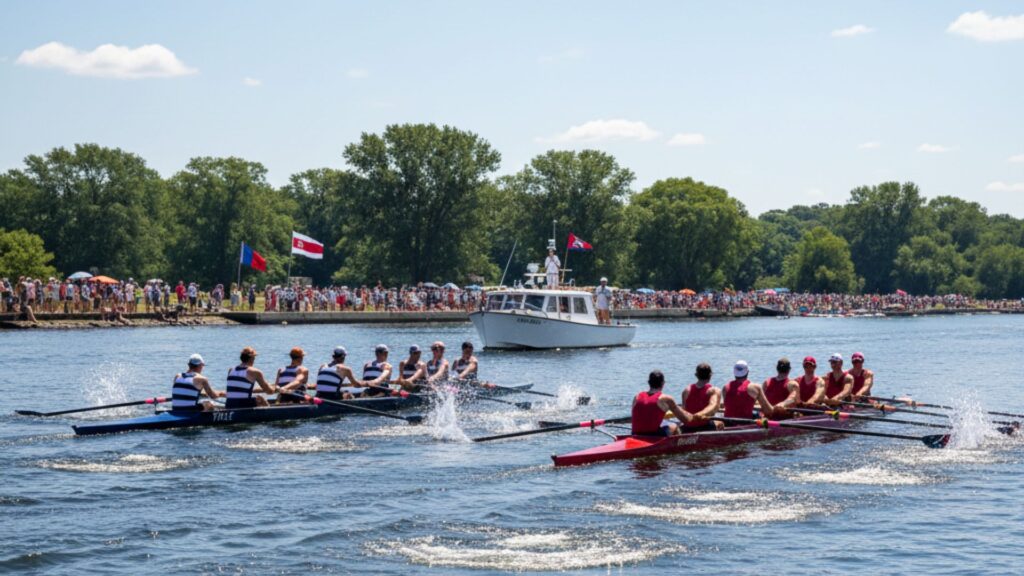
This in-depth article explores the origins, rules, evolution, highlights, controversies, training preparation, and significance of the Yale–Harvard Boat Race. You will also find a helpful table with important information, an FAQ section, and a clear conclusion summarizing the importance of this legendary competition.
Introduction to the Yale–Harvard Boat Race
The rivalry between Harvard University and Yale University is one of the oldest academic and athletic rivalries in America. Of all the competitions between the two Ivy League institutions, the Boat Race is perhaps the most iconic. Known formally as the Harvard–Yale Regatta, this race is recognized as the oldest intercollegiate sporting event in the United States.
Since its inception in 1852, the race has showcased the strength, endurance, and discipline of student-athletes from both universities. What makes it especially remarkable is its longevity and consistency. Except in times of national emergencies, the race has been held nearly every year, making it a tradition engrained deeply in the culture of both institutions.
The race is not just about athletic prowess; it is a reflection of community pride, historical prestige, and school identity. On race day, thousands of spectators gather along the riverbanks to cheer for their teams. Alumni return each year, turning the regatta into a reunion and celebration of institutional heritage.
Historical Background of the Yale–Harvard Boat Race
The origins of the Boat Race begin in the 19th century, when rowing was rising in popularity among American colleges. Inspired by the long-standing rowing traditions of British universities such as Oxford and Cambridge, Harvard and Yale sought to establish their own intercollegiate competition.
a. The First Race: 1852
The first Yale–Harvard Boat Race took place in August 1852 on Lake Winnipesaukee in New Hampshire. Remarkably, this event was sponsored by a railroad company seeking to promote tourism. Harvard emerged victorious in the inaugural race, setting the stage for one of the fiercest rivalries in American sports.
b. Establishing the Annual Tradition
After the initial race, the event gradually evolved into an annual tradition, moving permanently to the Thames River in Connecticut in 1878. The consistent location helped solidify the race’s identity and made it a staple event for both universities.
c. Interruptions Over Time
While the race has a long-standing history, it has occasionally been suspended during key historical events, such as:
- World War I
- World War II
- National crises
- Severe weather conditions
Despite these occasional pauses, the regatta remains one of the most consistently held athletic competitions in American collegiate sports.
Course and Structure of the Race
The Yale–Harvard Boat Race is set on a 4-mile (approximately 6.4 kilometers) stretch of the Thames River. This is longer than the standard 2,000-meter course used in most international rowing competitions, making the Harvard–Yale Regatta uniquely challenging.
a. Race Categories
The competition includes several heats:
- Varsity Eights (4-mile race)
- Junior Varsity Eights (3-mile race)
- Freshman/Third Varsity Eights (2-mile race)
The Varsity Eights race is the most prestigious and is the true highlight of the regatta.
b. The Unique 4-Mile Course
The course includes:
- Serpentine turns
- Varying wind patterns
- Changing river currents
- Narrow stretches requiring strategic steering
Coxswains play a vital role in navigating the river’s challenges. The length of the course demands exceptional endurance and strategy.
Rivalry Between Yale and Harvard in Rowing
The rivalry between the two universities extends beyond academics and into every major sport, but rowing holds a special place. The boat race is often regarded as a defining component of the rivalry due to its history, prestige, and symbolic significance.
a. Harvard’s Dominance
Historically, Harvard’s rowing program has been one of the strongest in the nation, often producing Olympic athletes and world champions. For many decades, Harvard held a significant lead in the overall wins.
b. Yale’s Rise and Comeback
Yale has also produced powerful rowing crews and has shown incredible improvements in recent years. In several modern competitions, Yale has managed to reclaim victories, not only closing the historical gap but also redefining the modern rivalry.
c. Emotional and Cultural Significance
For many alumni, the Boat Race is more than a sport:
- It symbolizes perseverance.
- It serves as a reminder of student days.
- It strengthens alumni ties.
- It is a moment of shared identity and nostalgia.
The rivalry has grown so strong that the race is often followed nationally, and media outlets widely cover the results.
Training and Preparation for the Regatta
Preparing for a 4-mile rowing competition requires intense physical and mental conditioning. Harvard and Yale athletes often dedicate months to training.
a. Physical Training
Rowers undergo:
- Long-distance endurance training
- Strength conditioning
- High-intensity interval sessions
- Technique refinement
b. Mental Discipline
The race is grueling, lasting roughly 18–22 minutes. Maintaining focus is crucial.
Athletes practice:
- Mental toughness
- Visualization
- Concentration training
- Stress management
c. Team Coordination
Rowing is a team sport where synchronization is everything. Teams spend countless hours perfecting:
- Stroke timing
- Rhythm
- Boat balance
- Coxswain commands
d. Coxswain Strategy
Coxswains must:
- Navigate curves
- Adjust pacing
- Communicate constantly
- Command sprints
- Counter river current challenges
The strategic skill of the coxswain often determines the outcome.
Memorable Races and Historic Moments
Over more than 170 years, the Yale–Harvard Boat Race has witnessed several unforgettable moments.
a. The 1875 Tie
One of the most famous races ended in a dead heat due to darkness and confusion.
b. The 1959 Harvard Upset
Harvard defeated a heavily favored Yale crew in what became a historic upset and is still discussed today.
c. Yale’s Modern Dominance (2015–2019)
Yale experienced a powerful resurgence during this period, winning multiple consecutive varsity races.
d. Harvard’s Legendary Crews in the 1970s
Harvard crews in the 1970s were among the fastest in the world and competed against top international athletes.
These moments contribute significantly to the mystique surrounding the regatta.
Cultural and Social Impact of the Yale–Harvard Boat Race
a. Alumni Gatherings
Thousands of alumni attend the event, making it a major reunion.
b. Local Economic Boost
New London’s economy benefits significantly from tourism and event-related activities.
c. Influence on American Rowing
The regatta has inspired:
- High school rowing programs
- Intercollegiate competitions
- Youth rowing culture
d. Media and Broadcasting
The race is broadcast online and covered by national sports outlets, amplifying its reach.
Important Information About the Yale–Harvard Boat Race
| Category | Details |
|---|---|
| First Race | 1852 |
| Location | Thames River, New London, Connecticut |
| Typical Distance | 4 miles (Varsity), 3 miles (JV), 2 miles (Freshman) |
| Universities Involved | Harvard University and Yale University |
| Significance | Oldest intercollegiate sporting event in the U.S. |
| Race Format | Annual regatta with multiple boat classes |
| Typical Duration | 18–22 minutes for varsity race |
| Notable Feature | Longest collegiate rowing race in the U.S. |
| Historical Dominance | Traditionally Harvard, with strong modern comeback from Yale |
| Key Skills Required | Endurance, strategy, teamwork, coxswain navigation |
| Spectator Attendance | Thousands annually |
FAQ about Yale Harvard Boat Race
What is the Yale–Harvard Boat Race?
It is the oldest annual intercollegiate sporting competition in the United States, held between Yale and Harvard’s rowing teams.
Where does the boat race take place?
The race is held on the Thames River in New London, Connecticut.
How long is the race?
The varsity race is 4 miles, which is significantly longer than standard rowing races.
When was the first race held?
The first regatta took place in 1852.
Who typically wins the race?
Historically, Harvard has held the advantage, but Yale has shown strong performances in recent decades.
Why is the race so important?
Its historical significance, tradition, and longstanding rivalry make it a prestigious collegiate athletic event.
How many types of races occur during the regatta?
There are usually three: Varsity Eights, Junior Varsity Eights, and Freshman/Third Varsity Eights.
How do athletes train for such a long race?
Training includes endurance, strength conditioning, rowing technique, and mental preparation.
Can spectators attend the race?
Yes, thousands of people attend the event each year, gathering along the riverbanks.
Is the race televised or streamed?
Yes, it is often streamed online and covered by national media outlets.
Conclusion
The Yale–Harvard Boat Race stands as a powerful symbol of American collegiate athletics, tradition, and competitive spirit. For over 170 years, this regatta has showcased the remarkable endurance, discipline, and teamwork of student-athletes from two of the nation’s most prestigious universities.
From its origins in the 19th century to its modern-day prominence, the race continues to captivate thousands of spectators and alumni. Its historical legacy, dramatic rivalries, strategic complexities, and cultural significance make the Yale–Harvard Boat Race more than a sporting event—it is an enduring tradition that reflects the values of perseverance, excellence, and camaraderie.
Whether you are a sports fan, a rowing enthusiast, a student, or simply someone interested in Ivy League traditions, the Yale–Harvard Boat Race remains a meaningful and fascinating piece of American sporting history.