
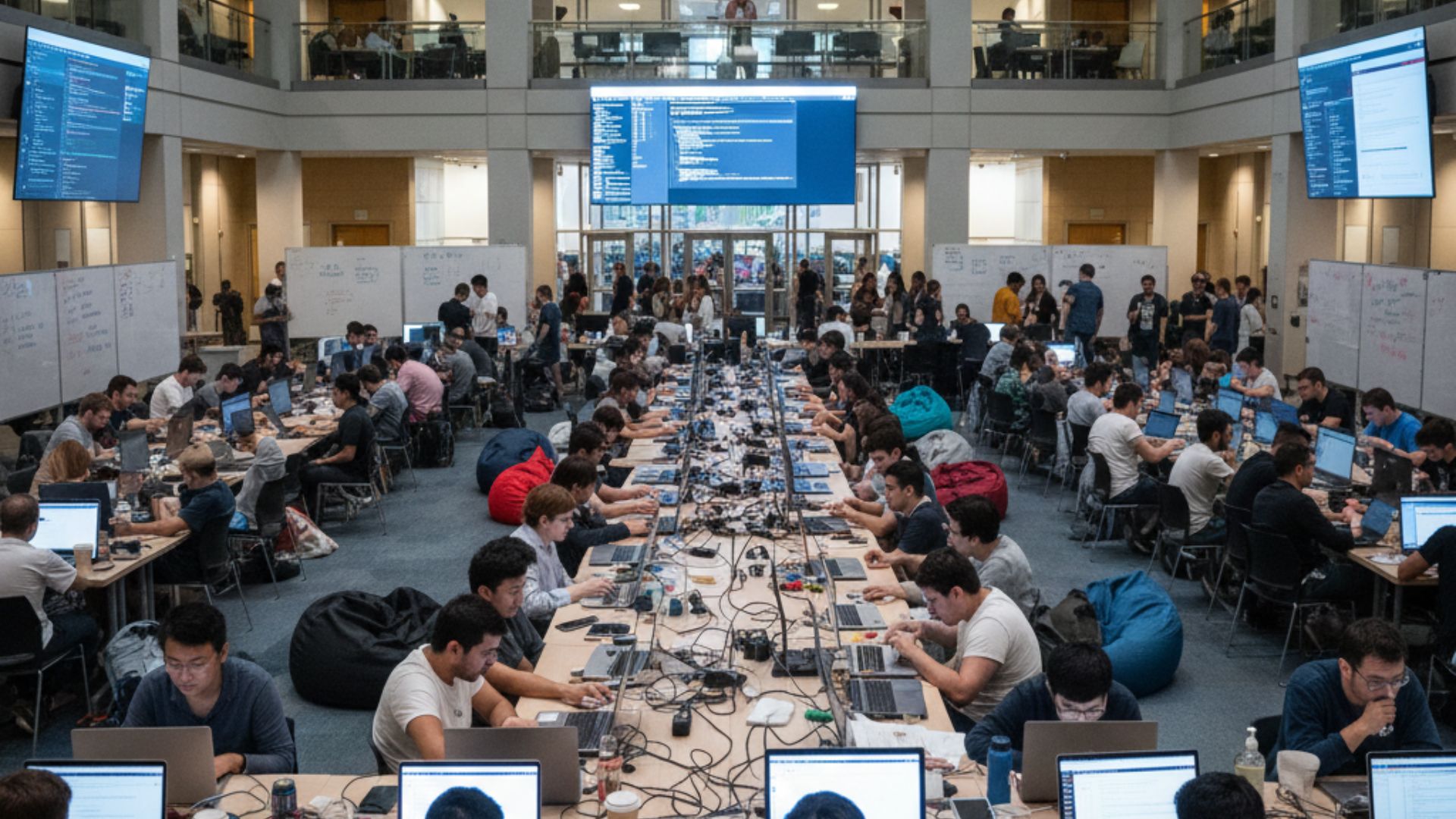
Harvard Hackathon: Hackathons have become one of the most influential platforms for students, developers, designers, and entrepreneurs to collaborate and create innovative solutions in a short span of time. Among the many hackathons organized around the world, the Harvard Hackathon stands out due to its academic environment, high-quality participation, and strong emphasis on solving real-world challenges. Hosted in one of the world’s most prestigious universities, the Harvard Hackathon represents the intersection of creativity, technology, and interdisciplinary collaboration.
This article provides a detailed overview of the Harvard Hackathon, how it works, its benefits, categories, participation details, and overall experience. Whether you are a student planning to participate or an enthusiast wanting to learn more, this guide gives a comprehensive understanding of everything related to the event.
What Is the Harvard Hackathon?
The Harvard Hackathon is an innovation-driven event held by student organizations or Harvard-affiliated groups. It invites participants from Harvard University and often students from across the world to come together for intensive sessions of brainstorming, coding, designing, and problem-solving. While each edition may differ in its theme, organization, or format, the core purpose remains the same: to create functional prototypes or creative ideas that address specific challenges.
Most hackathons at Harvard run for 24 to 48 hours, although some thematic hackathons may span longer. The environment encourages teamwork, rapid innovation, and collaborative learning. Participants typically work in teams of two to five members and present their projects to expert judges toward the end of the event.
The Purpose and Vision Behind the Harvard Hackathon
Harvard’s academic community emphasizes leadership, innovation, and public service. The hackathons organized under its umbrella follow the same principles. The primary vision behind such events includes:
1. Encouraging Innovation
Students are encouraged to step outside traditional classroom learning and experiment with creative solutions. Hackathons allow participants to think beyond theoretical knowledge and develop practical applications.
2. Fostering Collaboration
Harvard Hackathons often bring together students from various disciplines including engineering, design, medicine, humanities, and business. This interdisciplinary mix strengthens teamwork and broadens perspectives.
3. Solving Real-World Problems
Many hackathons organized at Harvard focus on issues such as climate change, public health, education, financial inclusion, digital accessibility, and civic engagement. Solving such challenges motivates students to contribute meaningfully to society.
4. Building Technical and Soft Skills
Participants gain experience in programming, design, research, public speaking, time management, and team collaboration. These skills often become valuable in future careers.
5. Networking and Career Opportunities
Industry experts, mentors, and sponsors who participate in Harvard hackathons offer guidance and real-world exposure. Many students receive job offers, internships, or fellowship opportunities based on their work.
How the Harvard Hackathon Works?
Although the structure of each hackathon may vary depending on its theme or organizing team, the general format includes the following components:
1. Registration and Team Formation
Participants can register individually or as a team. If registering individually, there are usually team formation activities or social interactions that help participants join or form a team.
2. Opening Ceremony
The event starts with an orientation session where participants are briefed about rules, judging criteria, available resources, and the theme of the hackathon.
3. Brainstorming and Planning
Teams spend the initial hours discussing ideas, understanding the problem statement, and dividing responsibilities among members.
4. Development Phase
During the core hours of the hackathon, teams work on building their solution. This may include coding, research, design, prototyping, and testing. Mentors often walk around to guide participants.
5. Workshops and Mentorship
Throughout the event, technical workshops, informational sessions, and expert mentoring are offered. Topics may include coding languages, design principles, business models, artificial intelligence, or presentation skills.
6. Project Submission
Teams submit their projects before the deadline. Submission usually includes the code, prototype, demonstration video, and a brief write-up.
7. Judging Round
A panel of judges, typically consisting of professors, industry professionals, and alumni, evaluates projects based on innovation, usability, technical complexity, and presentation.
8. Final Presentations
Selected teams present their projects on stage, explaining their idea, implementation process, and potential impact.
9. Awards and Closing Ceremony
Winning teams receive cash prizes, trophies, certificates, or access to incubation opportunities. The event concludes with networking sessions.
Themes and Categories in Harvard Hackathons
Harvard hosts several types of hackathons annually. Some of the common themes include:
1. Technology and Software Development
This includes app development, web development, machine learning models, cybersecurity solutions, and artificial intelligence projects.
2. Healthcare Innovation
Harvard’s strong medical ecosystem supports hackathons focused on public health, medical devices, digital health solutions, and disease prevention.
3. Sustainability and Climate Action
Hackathons may challenge participants to create solutions for reducing emissions, conserving energy, managing waste, and promoting environmental sustainability.
4. Social Impact
Some hackathons target community development, education accessibility, human rights issues, and public policy.
5. Business and Entrepreneurship
Participants create startup prototypes, develop business models, and explore market-based solutions.
6. Humanities and Design
Certain hackathons focus on creativity, design thinking, user behavior, and storytelling.
Benefits of Participating in a Harvard Hackathon
1. Practical Learning Experience
Students apply theoretical knowledge to real-life problems, improving their understanding of technology and innovation.
2. Access to Mentors
Harvard’s network of professors, alumni, and industry leaders provides invaluable guidance.
3. Exposure to New Technologies
Hackathons provide access to tools, APIs, and software resources that participants may not have used before.
4. Enhanced Resume and Portfolio
Developing a hackathon project is an excellent addition to professional portfolios, demonstrating discipline, creativity, and technical skills.
5. Potential Career Opportunities
Many companies sponsor Harvard hackathons to discover talented students.
6. Building Lifelong Connections
Working under intense time constraints helps establish strong friendships and professional relationships.
Important Links and Key Information
The following table includes essential information related to Harvard hackathons. Note: This information is general and meant to guide readers, not tied to any specific event edition.
| Category | Details |
|---|---|
| University Website | https://www.harvard.edu/ |
| Typical Duration | 24 to 48 hours |
| Participation | Harvard students and invited institutions |
| Common Themes | Technology, health, sustainability, social impact |
| Skills Required | Coding, design, research, teamwork |
| Registration Mode | Online |
| Project Submission | Prototype, code, video demo |
How to Prepare for a Harvard Hackathon?
1. Build Your Skills in Advance
Learn or revise key skills such as programming, UI design, or data analysis depending on your area of interest.
2. Form a Balanced Team
A strong team often includes a programmer, designer, researcher, and someone skilled in presentation or strategy.
3. Review Past Hackathon Themes
While not required, understanding common themes can help you brainstorm ideas early.
4. Manage Your Time Effectively
Time limits can be intense, so planning and dividing responsibilities early is crucial.
5. Keep Your Idea Simple and Impactful
Judges prefer practical solutions over overly complicated ones.
6. Practice Your Presentation
A well-explained idea often makes a stronger impression.
Common Challenges Faced During Hackathons
1. Time Pressure
Participants must complete a functional prototype within a limited timeframe.
2. Technical Issues
Software bugs, lack of experience, or tool limitations may slow down progress.
3. Team Coordination
Effective communication is crucial; misunderstandings can waste valuable time.
4. Fatigue
Working for extended hours requires stamina and determination.
5. Idea Overload
Choosing the right idea can be challenging due to the abundance of possibilities.
Success Tips for Harvard Hackathons
- Focus on solving a specific, clearly defined problem.
- Create a minimal viable product instead of a complete solution.
- Use simple design principles to improve user experience.
- Ask mentors for help early and often.
- Prioritize clear communication among team members.
- Present confidently with a strong narrative.
FAQ about Harvard Hackathon
Who can participate in a Harvard Hackathon?
Participation may vary by event. Many hackathons allow only Harvard students, while others invite students from different institutions or even professionals.
Do I need programming experience to join?
Not necessarily. Many teams include designers, writers, business strategists, and domain specialists.
Are hackathons free to attend?
Most student-organized hackathons at Harvard are free, although some may require a small registration fee.
What should I bring to a hackathon?
Participants typically bring a laptop, chargers, personal items, and any hardware tools they may need.
How are projects judged?
Judging criteria may include innovation, technical difficulty, impact, design quality, and presentation.
What if I do not have a team?
Many hackathons hold team formation sessions so individuals can meet and form groups.
Are there prizes?
Yes, prizes may include cash awards, gift vouchers, sponsorships, internship opportunities, or incubation support.
How long does a Harvard hackathon last?
Most run between 24 to 48 hours, though some may extend slightly longer.
Conclusion
The Harvard Hackathon is much more than a competitive coding event. It is a platform that brings together students, innovators, designers, and leaders who want to make a meaningful impact. From encouraging creativity and teamwork to providing exposure to leading experts and emerging technologies, Harvard hackathons create opportunities that extend beyond the event itself. Whether you aspire to develop a new app, design a healthcare solution, or create a socially impactful project, participating in a Harvard hackathon can be an empowering and transformative experience.
By preparing strategically, collaborating effectively, and focusing on producing a practical solution, any participant can maximize their chances of success. More importantly, the learning experience, friendships, and connections gained during the hackathon often remain long after the event is over.
If you are considering being a part of an innovation-driven environment where ideas turn into reality, the Harvard Hackathon is an incredible opportunity to begin that journey.