
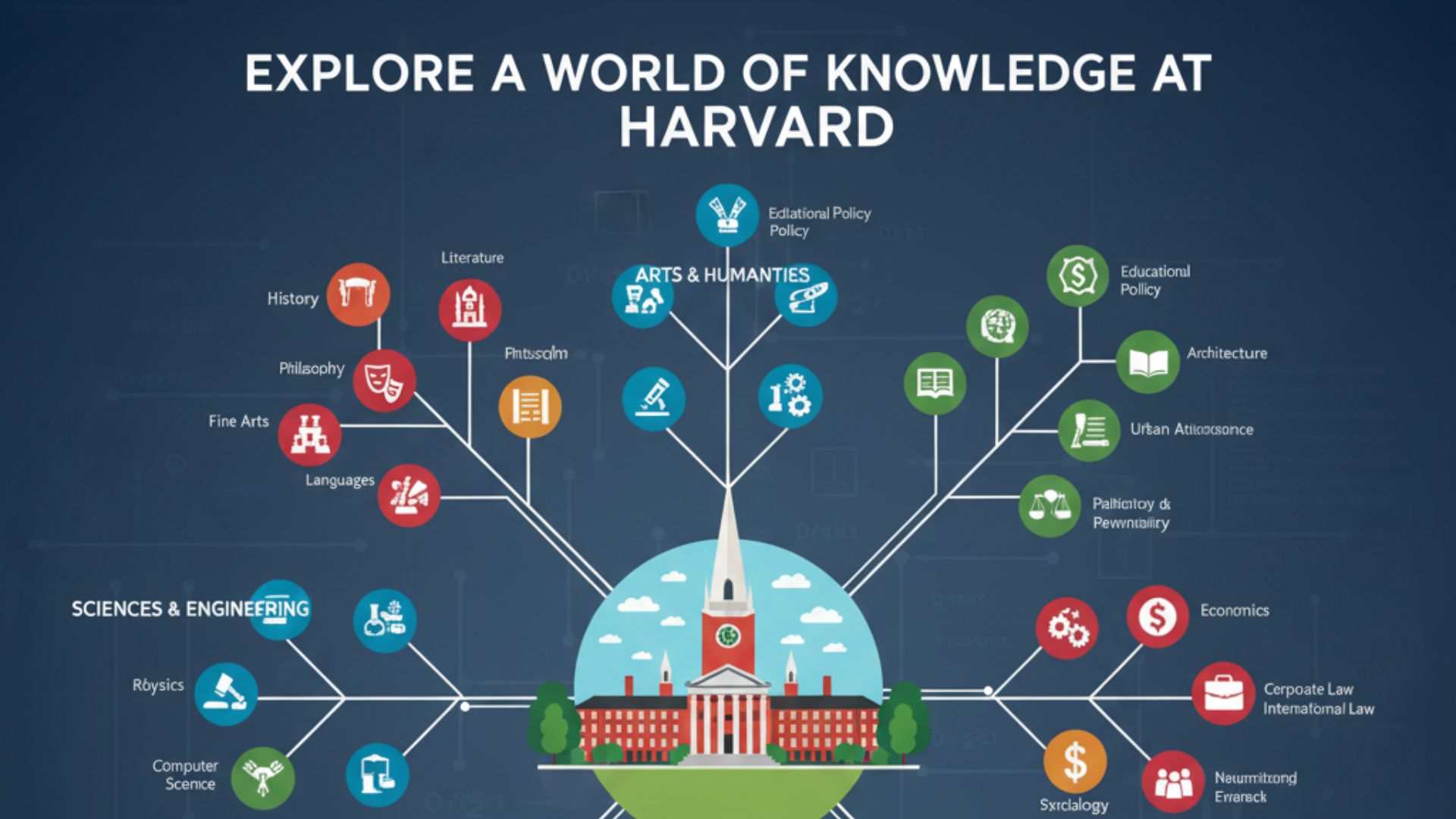
What Can You Study at Harvard? Harvard University, founded in 1636, is one of the world’s most prestigious and influential academic institutions. Known for its rigorous curriculum, distinguished faculty, and global impact, Harvard offers an extraordinary range of programs across undergraduate, graduate, and professional levels. Students from around the world aspire to join Harvard not only because of its name but also because of the breadth and depth of academic opportunities available across its many schools and departments.
If you are considering applying to Harvard or simply want to understand what academic paths the university supports, this comprehensive guide will walk you through the major programs, fields of study, interdisciplinary options, and unique academic experiences. Whether your interest lies in the arts, sciences, engineering, business, law, public policy, education, or medicine, Harvard provides a rich environment to pursue both traditional and emerging fields.
This article explores what you can study at Harvard, how programs are structured, which schools offer what disciplines, and how students combine majors, minors, concentrations, and special tracks to create customized academic pathways.
Important Information and Harvard Program Links
| Category | Description | Link |
|---|---|---|
| Harvard University Main Website | Information on admissions, academics, research, and campus life | https://www.harvard.edu/ |
| Harvard College | Undergraduate programs, concentrations, general education | https://college.harvard.edu/ |
| Harvard Graduate School of Arts and Sciences | Master’s and doctoral programs across arts, humanities, sciences, and social sciences | https://gsas.harvard.edu/ |
| Harvard Business School | MBA, Executive Education, Doctoral Programs | https://www.hbs.edu/ |
| Harvard Law School | JD, LLM, and SJD programs | https://hls.harvard.edu/ |
| Harvard Medical School | MD, PhD, and healthcare-related programs | https://hms.harvard.edu/ |
| Harvard Kennedy School | Public policy and public administration programs | https://www.hks.harvard.edu/ |
| Harvard Graduate School of Education | Teaching, leadership, and education research programs | https://www.gse.harvard.edu/ |
| Harvard School of Public Health | Programs focused on global health, epidemiology, and biostatistics | https://www.hsph.harvard.edu/ |
A Comprehensive Overview of What You Can Study at Harvard
Harvard offers academic programs through several schools, each with its own focus and degree offerings. These schools include:
- Harvard College (undergraduate programs)
- Graduate School of Arts and Sciences
- Harvard Business School
- Harvard Law School
- Harvard Kennedy School
- Harvard Graduate School of Education
- Harvard Medical School
- Harvard Divinity School
- Harvard School of Public Health
- Harvard School of Engineering and Applied Sciences (SEAS)
- Harvard Extension School
Together, these institutions provide hundreds of courses and degree pathways.
Let’s explore the major areas of study in detail.
Undergraduate Studies at Harvard College
Harvard College offers more than 50 concentrations (majors), 49 secondary fields (minors), and multiple joint-degree programs. Undergraduate study emphasizes a balance of foundational knowledge, specialized concentration work, and general education.
Major Academic Categories at Harvard College
Humanities
Students interested in literature, philosophy, history, culture, or languages can pursue various humanities concentrations, such as:
- English
- Comparative Literature
- Philosophy
- History
- Linguistics
- Classics
- Near Eastern Languages and Civilizations
- East Asian Studies
- African and African American Studies
- Visual and Environmental Studies
- Studies of Women, Gender, and Sexuality
Humanities programs emphasize analytical writing, critical thinking, cultural understanding, and creative expression.
Social Sciences
Harvard is widely recognized for its social science programs, especially economics, political science, and sociology. Popular concentrations include:
- Economics
- Government
- Sociology
- Anthropology
- Psychology
- History of Science
- Social Studies
- Global Health and Health Policy
- African American Studies
These programs prepare students for careers in law, public service, consulting, international relations, research, and policy.
Sciences
Students interested in scientific inquiry can study:
- Chemistry
- Biology
- Physics
- Earth and Planetary Sciences
- Astrophysics
- Human Developmental and Regenerative Biology
- Neuroscience
Scientific programs offer opportunities for hands-on research, lab apprenticeships, and collaborations with Harvard Medical School faculty.
Engineering and Applied Sciences
The Harvard John A. Paulson School of Engineering and Applied Sciences (SEAS) offers concentrations in:
- Computer Science
- Electrical Engineering
- Mechanical Engineering
- Biomedical Engineering
- Environmental Science and Engineering
- Applied Mathematics
Harvard’s engineering programs combine rigorous science with design thinking and interdisciplinary innovation.
Interdisciplinary Programs
Harvard encourages cross-field exploration. Popular interdisciplinary concentrations include:
- Cognitive Science
- Environmental Science and Public Policy
- Women, Gender, and Sexuality Studies
- Folklore and Mythology
- History and Literature
- Biomedical Engineering
- Applied Mathematics
Students frequently combine multiple fields to create highly personalized academic paths.
Graduate School of Arts and Sciences (GSAS)
GSAS offers master’s and PhD programs across dozens of fields. Some major categories include:
Humanities
- Comparative Literature
- English
- Philosophy
- Music
- Romance Languages and Literatures
- Slavic Languages
- Film and Visual Studies
Social Sciences
- Anthropology
- Economics
- Government
- Sociology
- Psychology
- History
- Public Policy
Sciences
- Biological Sciences
- Chemical and Physical Biology
- Biophysics
- Physics
- Mathematics
- Earth and Planetary Sciences
- Astronomy
- Statistics
GSAS students engage in research with world-renowned faculty and contribute to scholarly advances in their respective fields.
Harvard Business School (HBS)
Harvard Business School offers:
- MBA (Master of Business Administration)
- Executive Education Programs
- Doctoral Programs (DBA and PhD)
Fields of focus include:
- Leadership
- Entrepreneurship
- Finance
- Marketing
- Strategic Management
- Organizational Behavior
- Technology and Operations
- Business Economics
HBS is known for its case-study teaching method and global leadership network.
Harvard Law School (HLS)
Students can pursue:
- JD (Juris Doctor)
- LLM (Master of Laws)
- SJD (Doctor of Juridical Science)
Areas of study include:
- Constitutional Law
- Criminal Law
- Corporate Law
- International Law
- Intellectual Property
- Human Rights
- Environmental Law
- Technology and Cybersecurity Law
Harvard Law School is one of the most influential law schools globally.
Harvard Medical School (HMS)
HMS offers:
- MD Degree
- MD-PhD Programs
- Master’s Programs in Bioethics, Biomedical Informatics, etc.
Key fields include:
- Medicine
- Biomedical Research
- Genetics
- Immunology
- Neuroscience
- Public Health
- Global Health
HMS collaborates with top hospitals and research centers in Boston.
Harvard Kennedy School (HKS)
HKS prepares students for leadership in public service. Degrees include:
- Master of Public Policy (MPP)
- Master of Public Administration (MPA)
- Mid-career MPA
- PhD in Public Policy or Political Economy
Students study:
- International Affairs
- Political Science
- Public Leadership
- Economic Development
- Social Policy
- Crisis Management
Harvard Graduate School of Education (HGSE)
HGSE offers:
- Master’s Programs in Education
- Doctor of Education Leadership (Ed.L.D.)
- Doctor of Philosophy in Education
Students focus on:
- Learning and Teaching
- Human Development
- Education Policy
- School Leadership
- Higher Education
Harvard School of Public Health
Areas of study include:
- Epidemiology
- Global Health
- Biostatistics
- Environmental Health
- Health Policy
- Population Studies
Harvard Divinity School
Programs include:
- Master of Divinity
- Master of Theological Studies
- Doctoral Programs
Fields range from world religions to ethics and cultural studies.
Harvard Extension School
Harvard Extension School provides:
- Bachelor’s Degree Program
- Master’s Degrees
- Professional Graduate Certificates
Fields include:
- Business
- Information Technology
- Sustainability
- Psychology
- Journalism
- Museum Studies
- Global Studies
Extension School allows working professionals to study part time.
Interdisciplinary Programs Across Harvard
Harvard encourages interdisciplinary exploration. Students can take cross-school courses in fields such as:
- Artificial Intelligence
- Environmental Policy
- Health Sciences
- Data Science
- International Development
- Behavioral Economics
Harvard’s cross-registration options allow students to take classes at:
- MIT
- Harvard Business School
- Harvard Law School
- Harvard Kennedy School
This flexibility significantly broadens academic possibilities.
Special Academic Opportunities at Harvard
In addition to formal degree programs, Harvard offers:
Research Opportunities
Students at all levels can work with leading scholars across science, humanities, and social sciences.
Study Abroad
Harvard partners with universities worldwide for semester or year-long study.
Language Programs
Harvard offers more than 80 languages, including rare and ancient languages.
Joint and Dual Degrees
Examples include:
- JD/MBA
- MD/PhD
- MPP/MBA
- Engineering + Business crossover programs
General Education Curriculum
Undergraduates take general education courses to broaden intellectual foundations.
FAQ about What Can You Study at Harvard?
What is the most popular major at Harvard?
Economics is traditionally the most popular concentration among undergraduates, followed by computer science and government.
Can students double major at Harvard?
Harvard does not offer double majors in the traditional sense but allows joint concentrations and secondary fields.
Does Harvard offer online degrees?
Harvard Extension School offers online and hybrid degree programs for adult learners.
What can international students study at Harvard?
International students can study any concentration or program offered by Harvard, depending on eligibility and admissions.
Are engineering programs strong at Harvard?
Yes, the School of Engineering and Applied Sciences is rapidly expanding and offers state-of-the-art engineering programs.
Can students take classes at MIT?
Yes, Harvard students can cross-register for courses at MIT.
What is the main difference between Harvard College and Harvard University?
Harvard College is the undergraduate school; Harvard University includes all schools and graduate programs.
Do all Harvard students have to take general education courses?
Yes, undergraduates complete general education requirements as part of their degree.
Can you study medicine as an undergraduate?
No undergraduate major is specifically called “pre-med,” but students can choose science majors that prepare them for medical school.
What is the easiest major at Harvard?
Harvard does not classify any major as easy; all concentrations require rigorous academic work.
Conclusion
Harvard University offers one of the broadest and most diverse academic ecosystems in the world. Whether you are interested in liberal arts, sciences, engineering, business, law, medicine, public policy, education, or interdisciplinary studies, Harvard provides programs that combine intellectual depth with unparalleled opportunities. The university’s academic offerings stretch far beyond traditional degrees, embracing cutting-edge research, cross-disciplinary innovation, and global collaboration.
Students can choose from dozens of concentrations, advanced graduate degrees, professional tracks, and flexible learning options. With its world-renowned faculty, extensive research facilities, and access to global partnerships, Harvard is a place where students can pursue virtually any academic ambition.