
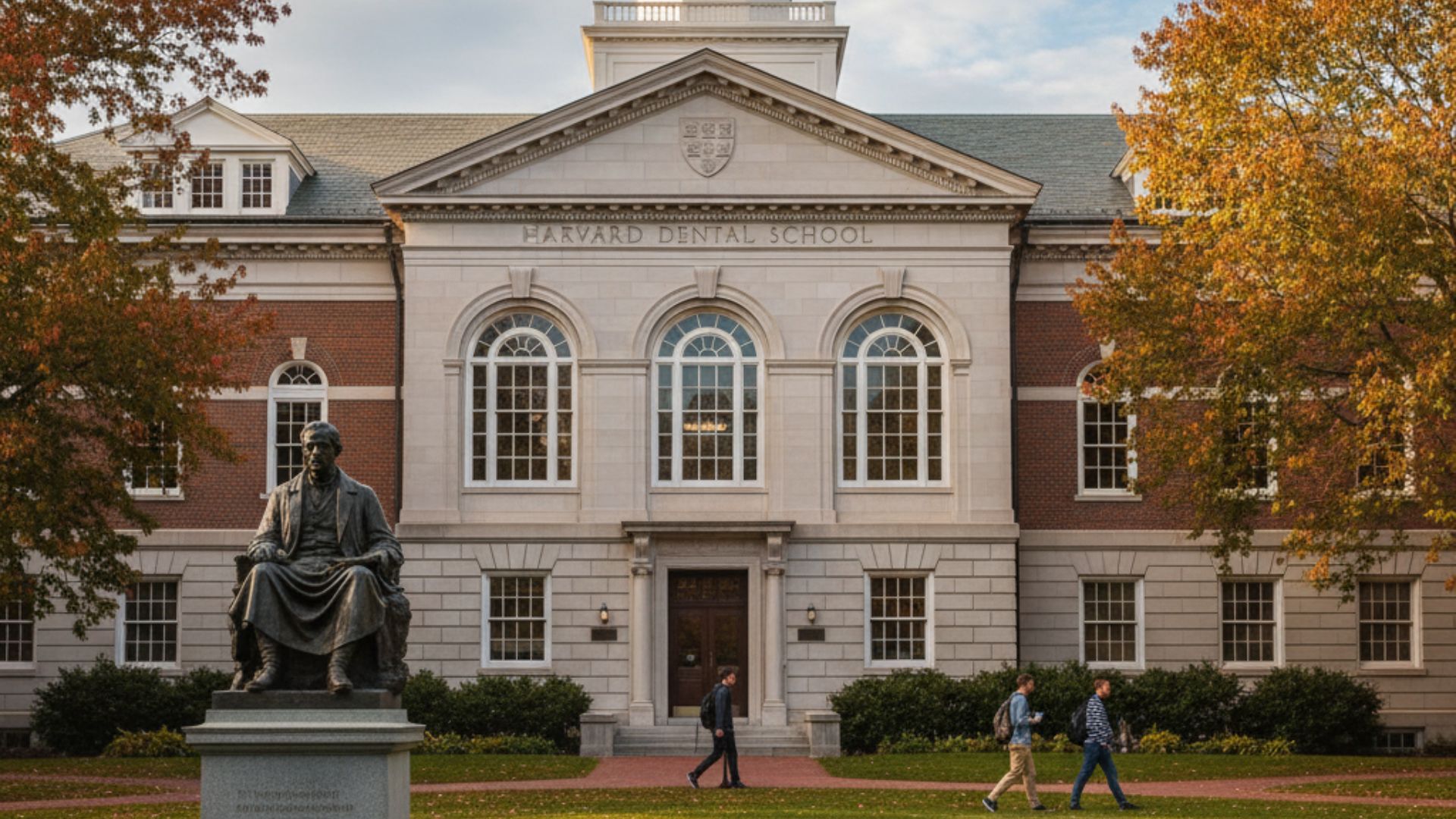
Harvard Dental School: The Harvard School of Dental Medicine (HSDM) stands as one of the most respected and pioneering dental institutions in the world. Established in 1867, it was the first university-based dental school in the United States and has since set global benchmarks for innovation, research, and clinical care in oral health.
Located in Boston, Massachusetts, and affiliated with Harvard University, HSDM is deeply integrated with the Harvard Medical School and other Harvard research institutions. It offers rigorous academic programs, cutting-edge research facilities, and a strong emphasis on community service and leadership in the field of dentistry.
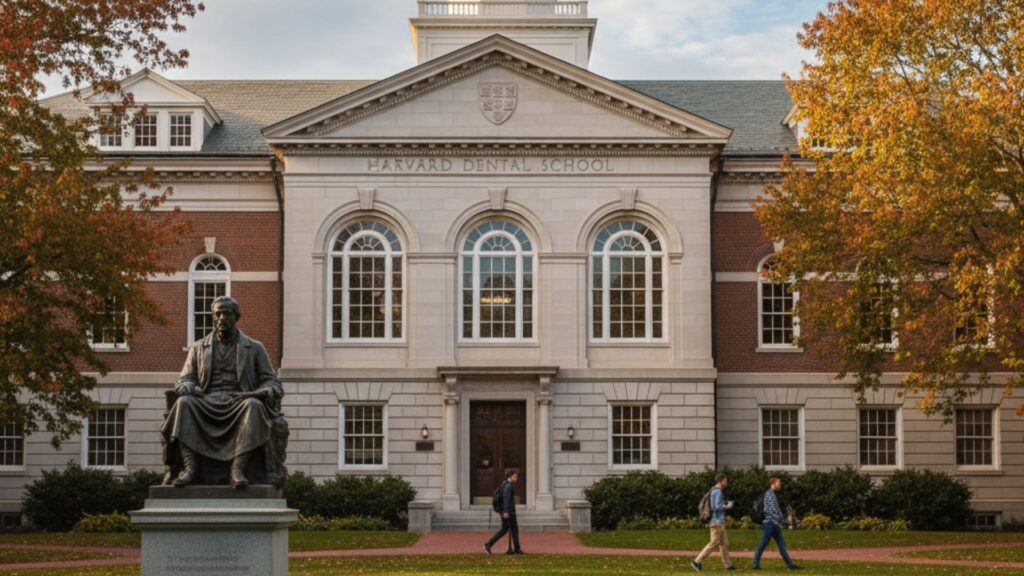
In this comprehensive article, we will explore the history, programs, admissions, research, and global impact of the Harvard School of Dental Medicine, along with key details every prospective student or dental professional should know.
Important Links and Information
| Category | Information |
|---|---|
| Full Name | Harvard School of Dental Medicine (HSDM) |
| Established | 1867 |
| Location | 188 Longwood Avenue, Boston, Massachusetts 02115, USA |
| Affiliation | Harvard University and Harvard Medical School |
| Dean | William V. Giannobile, D.D.S., M.S., D.M.Sc. |
| Programs Offered | DMD (Doctor of Dental Medicine), Advanced Graduate Programs, PhD in Biological Sciences in Dental Medicine, Continuing Education |
| Official Website | https://hsdm.harvard.edu |
| Application System | ADEA AADSAS (American Dental Education Association) |
| Application Deadline | Typically November 1 (for next academic year) |
| Annual Tuition (Approx.) | $67,000 – $70,000 per year (excluding fees) |
| Duration of DMD Program | 4 years |
| Student to Faculty Ratio | Approximately 3:1 |
| Clinical Training Location | Harvard Dental Center and affiliated hospitals |
| Contact Email | admissions@hsdm.harvard.edu |
| Phone Number | +1 (617) 432-1434 |
| Financial Aid | Scholarships, Federal Loans, and Harvard Financial Aid Program |
| Academic Calendar | August to May (Semester-based system) |
| Alumni Network | 2,000+ professionals across 60 countries |
A Historical Overview of Harvard Dental School
The Harvard School of Dental Medicine was founded in 1867 as the first university-based dental school in the United States. At the time, most dental training occurred through apprenticeships. Harvard’s establishment of a dental program marked a turning point — positioning dentistry as a profession grounded in science, research, and medicine.
The founders envisioned dentistry as an integral part of healthcare rather than an isolated trade. This vision gave rise to the concept of “dental medicine”, which would later inspire the school’s current name, officially changed from Harvard Dental School to Harvard School of Dental Medicine in 1940.
Over its long history, HSDM has been at the forefront of curricular innovation, biomedical research, and public health initiatives, consistently advancing the boundaries of oral science and patient care.
Mission and Educational Philosophy
The mission of HSDM is to educate global leaders in dental medicine, integrate oral health into overall health, and improve the quality of life through teaching, research, and community service.
HSDM’s educational philosophy is distinct because it integrates dental and medical education. Students at HSDM spend their first two years studying alongside Harvard Medical School students, learning about human anatomy, physiology, and pathology in an interdisciplinary setting. This model emphasizes the relationship between oral health and systemic health — preparing students to become clinicians who understand the body holistically.
Academic Programs at Harvard School of Dental Medicine
Harvard Dental School offers a range of undergraduate, graduate, and continuing education programs designed for future leaders in oral healthcare, research, and academia.
1. Doctor of Dental Medicine (DMD)
The flagship program at HSDM is the Doctor of Dental Medicine (DMD) degree, a four-year professional program that combines rigorous academic instruction with extensive clinical training.
Program Structure:
- Preclinical Education (Years 1 & 2):
Students take courses jointly with Harvard Medical School, focusing on foundational biomedical sciences such as anatomy, histology, biochemistry, and pathology. - Clinical Education (Years 3 & 4):
Students move into clinical practice at the Harvard Dental Center, treating patients under supervision. They also rotate through Boston’s top hospitals, gaining interdisciplinary medical exposure. - Community-Based Learning:
HSDM emphasizes service-based learning through programs in underserved communities.
The program’s small class size — typically around 35 students per year — ensures personalized mentorship and collaboration.
2. Advanced Graduate and Specialty Programs
HSDM also offers postdoctoral programs in dental specialties such as:
- Orthodontics
- Endodontics
- Periodontology
- Prosthodontics
- Pediatric Dentistry
- Oral and Maxillofacial Surgery
- Dental Public Health
These programs lead to Master of Medical Sciences (MMSc) or Doctor of Medical Sciences (DMSc) degrees and are known for their strong research and clinical components.
3. PhD in Biological Sciences in Dental Medicine
In collaboration with the Harvard Faculty of Arts and Sciences, this research-intensive PhD program focuses on the molecular, genetic, and developmental mechanisms of oral and craniofacial health. Graduates typically pursue careers in academic research or biomedical industries.
4. Continuing Education Programs
HSDM provides continuing education courses for licensed dental professionals seeking to stay current with the latest developments in dentistry, oral pathology, implantology, and public health. These programs often combine online and in-person instruction.
Research at Harvard School of Dental Medicine
Research lies at the core of HSDM’s identity. The school’s scientists and clinicians conduct pioneering studies that explore the intersection of oral health, systemic disease, and regenerative biology.
Major Research Areas Include:
- Regenerative Dentistry: Using stem cells and tissue engineering to restore teeth and oral tissues.
- Craniofacial Biology: Understanding the genetics and development of facial structures.
- Oral Microbiome Research: Studying the relationship between oral bacteria and diseases like diabetes and cardiovascular conditions.
- Public Health Dentistry: Investigating access to dental care and global oral health disparities.
- Bioinformatics and Precision Medicine: Using data to personalize dental treatment and diagnostics.
The research facilities are supported by Harvard’s extensive network, including Harvard Medical School, Harvard T.H. Chan School of Public Health, and Massachusetts General Hospital.
Clinical Training and Patient Care
Clinical training is a hallmark of the HSDM experience. Students gain real-world experience treating patients at the Harvard Dental Center, which provides comprehensive care in a teaching environment.
The Dental Center includes:
- Teaching Practices for DMD students
- Faculty Group Practices led by experienced clinicians
- Specialty Clinics in orthodontics, prosthodontics, and periodontics
Additionally, students rotate through partner hospitals such as:
- Brigham and Women’s Hospital
- Boston Children’s Hospital
- Massachusetts General Hospital
This integration ensures that HSDM graduates emerge not only as skilled dentists but also as healthcare professionals with a broad medical perspective.
Admissions Process and Requirements
Admission to Harvard Dental School is extremely competitive. With an acceptance rate of roughly 3–4%, it is among the most selective dental schools in the world.
Basic Requirements:
- Bachelor’s degree (preferably in science-related field)
- Completion of prerequisite courses in biology, chemistry, physics, and English
- Dental Admission Test (DAT) scores
- Strong academic record (GPA typically 3.8 or higher)
- Letters of recommendation
- Personal statement
- Interview (by invitation)
HSDM places emphasis on academic excellence, leadership, research experience, and community service. Applicants are expected to demonstrate genuine commitment to improving oral health and advancing the dental profession.
Tuition, Financial Aid, and Scholarships
Tuition for the DMD program is approximately $67,000–$70,000 per academic year, with additional fees for health insurance, books, instruments, and clinical supplies.
However, HSDM provides substantial financial aid through scholarships, federal loans, and need-based assistance. Nearly 70% of students receive some form of financial aid, ensuring that financial constraints do not hinder deserving candidates.
Student Life at Harvard Dental School
HSDM students enjoy a vibrant academic and social environment within the Harvard Longwood Medical Area, home to several leading medical and research institutions.
Student life is enriched through:
- Professional organizations (such as the American Student Dental Association)
- Community outreach initiatives
- Interdisciplinary research seminars
- Harvard-wide networking events
The tight-knit community and small class size foster collaboration, diversity, and long-lasting friendships among future healthcare leaders.
Global Impact and Community Service
HSDM has an enduring commitment to public service and global oral health. The school operates numerous outreach programs that provide dental care to underserved populations in the U.S. and abroad.
Students often participate in:
- Boston community health clinics
- Global health initiatives in developing countries
- Educational programs promoting oral hygiene and disease prevention
These programs embody Harvard’s mission to bridge science, service, and social responsibility.
FAQ about Harvard Dental School
What is the difference between Harvard Dental School and other dental schools?
HSDM uniquely integrates dental education with Harvard Medical School, emphasizing the connection between oral health and systemic health.
What degree does Harvard Dental School award?
Graduates earn a Doctor of Dental Medicine (DMD) degree, which is equivalent to a DDS in other institutions.
How long is the dental program at Harvard?
The DMD program spans four years of full-time study.
Does Harvard Dental School offer online programs?
Only continuing education courses may be offered online. Degree programs require on-campus attendance.
What is the average GPA and DAT score for admission?
Admitted students typically have a GPA of 3.8 or higher and DAT scores in the 90th percentile.
Is financial aid available?
Yes. Harvard offers need-based financial aid and scholarships to eligible students.
Where do graduates work after completing the program?
HSDM alumni often pursue careers in private practice, academia, hospital dentistry, public health, and research.
What is the student-to-faculty ratio?
The small class size provides a 3:1 student-to-faculty ratio, allowing individualized mentorship.
Conclusion
The Harvard School of Dental Medicine represents the highest standards in dental education, research, and clinical practice. Its integration with Harvard Medical School, commitment to interdisciplinary learning, and focus on global health distinguish it from all other institutions.
HSDM graduates are not only skilled clinicians but also visionary leaders who advance the field of dentistry through innovation, compassion, and scientific discovery.
Whether you are an aspiring dentist, researcher, or healthcare professional, the Harvard School of Dental Medicine stands as a beacon of excellence — shaping the future of oral health for generations to come.