

Harvard President Salary: Harvard University, one of the most prestigious academic institutions in the world, often finds itself at the center of discussions about education, innovation, and leadership. Yet, one topic that frequently attracts public attention is the salary of the Harvard University president.
As the head of a globally recognized university with a multibillion-dollar endowment, the president of Harvard carries immense responsibility — overseeing academic excellence, financial management, research initiatives, and institutional reputation. With this responsibility comes a compensation package that reflects the scope and complexity of the position.
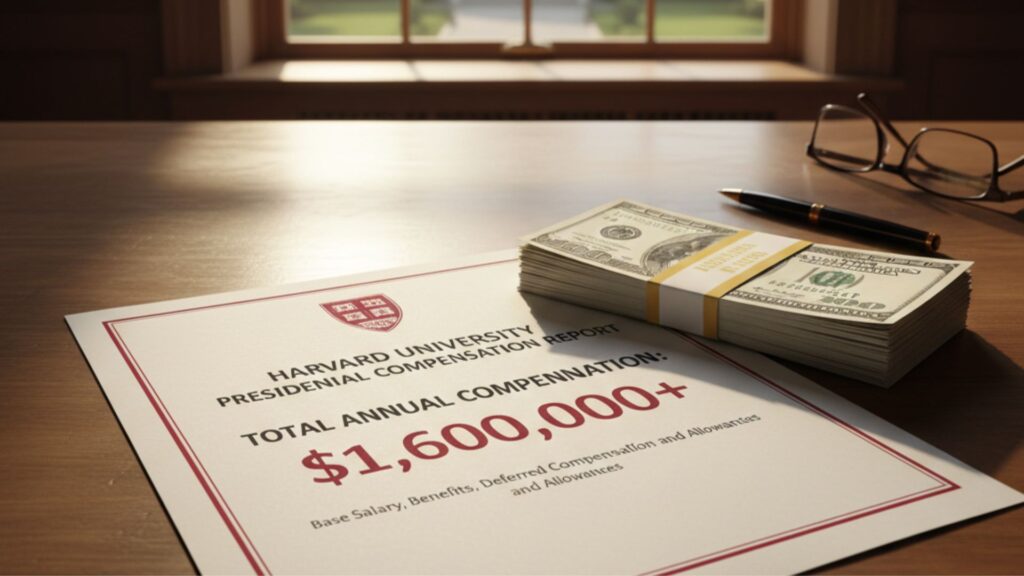
In this comprehensive article, we will explore how much the Harvard president earns, the factors influencing the salary, comparisons with other Ivy League leaders, public debates about pay equity, and the broader economic implications of university leadership compensation.
The Role of the Harvard President
Before discussing salary, it is important to understand the role of the Harvard president. The position is not merely ceremonial; it carries substantial executive, academic, and administrative responsibilities.
The Harvard president serves as:
- The chief executive officer of the university.
- The primary spokesperson representing Harvard’s values, goals, and policies.
- The overseer of financial and academic operations across multiple schools, including Harvard College, Harvard Business School, and Harvard Law School.
- The leader of strategic initiatives related to research funding, diversity, sustainability, and technological innovation.
- The liaison between Harvard and global communities, including governments, donors, and educational organizations.
This blend of administrative oversight and visionary leadership makes the president’s role one of the most demanding in higher education — and it naturally influences the level of compensation.
Understanding Harvard’s Salary Structure for Its President
The salary of the Harvard president typically includes multiple components:
- Base Salary: The fixed annual compensation.
- Deferred Compensation: Funds set aside for retirement or long-term service rewards.
- Performance Incentives: Bonuses or additional pay tied to specific goals, such as fundraising achievements or institutional performance.
- Benefits and Perks: These include housing, travel allowances, health benefits, and other executive privileges.
Unlike corporate CEOs, university presidents’ salaries are public information, as universities like Harvard file annual reports and tax documents (Form 990) due to their nonprofit status.
Historical Overview of Harvard Presidential Salaries
Over the years, Harvard’s presidential compensation has evolved in response to inflation, institutional expansion, and competitive higher education markets.
- Early 20th Century: Presidents earned modest salaries, typically comparable to those of senior professors.
- Mid to Late 20th Century: Salaries began to increase as universities grew more complex, requiring strong administrative and fundraising capabilities.
- 21st Century: With Harvard’s endowment surpassing $50 billion, the role became more executive in nature, and compensation rose accordingly.
This progression mirrors a broader trend in higher education, where the salaries of university leaders have increased in line with the financial and operational size of their institutions.
Key Factors Influencing the Harvard President’s Salary
Several factors determine how Harvard structures its president’s pay package:
- Institutional Scale: Harvard operates one of the world’s largest university systems, requiring extensive management and coordination.
- Endowment Management: Overseeing a massive endowment fund with global investments necessitates executive-level oversight.
- Fundraising: Harvard’s ability to attract donations in the billions depends significantly on the president’s leadership and public presence.
- Market Competitiveness: To attract top-tier leaders, Harvard must offer compensation comparable to peer institutions.
- Public Scrutiny and Transparency: As a nonprofit, Harvard must balance attractive pay with social responsibility and transparency in reporting.
Each of these elements contributes to shaping a salary package that reflects both responsibility and accountability.
Comparison with Other Ivy League Presidents
The Harvard president’s salary is often compared with those of other Ivy League institutions to provide context.
While the figures vary annually, Harvard typically ranks near the top or slightly below Yale and Columbia in total compensation.
| University | President’s Estimated Total Compensation (Recent Years) | Notes |
|---|---|---|
| Harvard University | Approximately $900,000 to $1.2 million annually | Includes base salary and benefits |
| Yale University | Around $1.4 million | Higher due to deferred pay and endowment management role |
| Princeton University | Approximately $950,000 | Competitive with Harvard’s structure |
| Columbia University | Around $1.5 million | Among the highest in the Ivy League |
| University of Pennsylvania | $1.2–1.3 million | Strong fundraising component in pay |
| Cornell University | $900,000–$1 million | Similar to Harvard |
| Brown University | $850,000–$950,000 | Slightly lower but increasing |
| Dartmouth College | $800,000 | Reflects smaller institutional scale |
These figures indicate that while Harvard’s president is among the best-compensated academic leaders, the pay remains within the range of similar top-tier universities.
Breakdown of Compensation Components
A typical Harvard president’s pay structure might look like this:
| Component | Approximate Range (Annual) | Description |
|---|---|---|
| Base Salary | $700,000–$900,000 | Fixed salary for core duties |
| Deferred Compensation | $100,000–$200,000 | Retirement and long-term service funds |
| Housing Benefit | $100,000+ | Official residence and related costs |
| Other Benefits | $50,000+ | Insurance, transportation, and wellness |
| Total Estimated Compensation | $900,000–$1.2 million | Comprehensive package |
This structure ensures both immediate compensation and long-term security while aligning incentives with institutional success.
Debates and Public Perception
The topic of university presidential salaries is often controversial. Critics argue that leaders of nonprofit, education-focused institutions should not earn executive-level pay, especially when tuition and student debt remain high.
However, supporters counter that the scope of the role justifies the pay. Managing a university like Harvard involves overseeing thousands of employees, managing a $50 billion endowment, and ensuring the institution remains globally competitive.
Common debates include:
- Equity vs. Market Value: Should academic leadership pay match corporate scales?
- Public Accountability: How transparent should compensation decisions be?
- Moral Responsibility: Should the president’s salary reflect Harvard’s commitment to social justice and education access?
Harvard, for its part, maintains that its salary decisions are based on performance, institutional scale, and alignment with peer institutions.
Economic and Ethical Dimensions
The economics of university leadership compensation extend beyond Harvard. In a market-driven world, top universities compete not only for students but also for leadership talent.
Ethically, universities like Harvard must demonstrate that such compensation serves educational purposes — not personal enrichment. The expectation is that strong leadership helps secure more funding, advance research, and support scholarships.
Harvard’s public disclosures and performance metrics show that its presidents’ salaries are part of a broader strategy for long-term institutional stability and excellence.
Presidential Residence and Perks
Another aspect of compensation includes the official residence — the historic Elmwood House, located near Harvard Square in Cambridge, Massachusetts.
This residence serves both as a private home and as a venue for university events, fundraisers, and diplomatic meetings. The cost of maintenance and security is covered by the university, which adds significant value to the total benefits package.
Other perks may include:
- Travel Allowances for university-related engagements.
- Retirement Contributions matching executive standards.
- Healthcare and Insurance packages of high quality.
- Academic Resources, including access to Harvard’s vast research networks.
These benefits align the president’s lifestyle with the demands of representing a global institution.
Leadership Impact and Institutional Value
A university president’s salary can also be viewed in terms of return on investment. Effective leadership can significantly impact endowment performance, fundraising, and institutional reputation.
For instance, strong presidential leadership can:
- Attract billion-dollar donations.
- Improve research partnerships and academic rankings.
- Strengthen alumni engagement.
- Drive diversity and inclusion initiatives.
- Foster international collaborations.
When viewed through this lens, compensation reflects both the responsibility and impact of the office.
Important Links and Information about the Harvard President
| Category | Details / Links |
|---|---|
| Official University Website | https://www.harvard.edu |
| Office of the President | https://www.harvard.edu/about/leadership/president/ |
| University Endowment Overview | https://www.harvard.edu/about/endowment/ |
| IRS Form 990 Reports (Public) | Available through Harvard’s Financial Transparency Portal |
| Presidential Residence | Elmwood House, Cambridge, Massachusetts |
| Governance Body | Harvard Corporation and Board of Overseers |
| Estimated Total Compensation | $900,000–$1.2 million annually |
| Role Summary | Chief executive officer and academic leader of Harvard University |
| Notable Former Presidents | Drew Gilpin Faust, Lawrence Bacow, Claudine Gay |
| Mission Focus | Academic excellence, leadership, innovation, and inclusion |
FAQ about Harvard President Salary
How much does the Harvard president make?
The Harvard president earns an estimated $900,000 to $1.2 million per year, including salary, benefits, and deferred compensation.
Why does the Harvard president earn so much?
The compensation reflects the complexity and scale of managing Harvard’s global operations, $50+ billion endowment, and multiple academic institutions.
Who decides the president’s salary?
The Harvard Corporation, the university’s top governing body, determines executive compensation based on performance and benchmarking against peer institutions.
Does the Harvard president receive free housing?
Yes, the president lives in the Elmwood House, an official residence maintained by the university, which serves both private and institutional functions.
How does the salary compare to other Ivy League presidents?
Harvard’s compensation is competitive, often ranking near Princeton, Yale, and Columbia in total value.
Is the Harvard president’s salary funded by student tuition?
No. The salary comes from Harvard’s endowment and operational budgets, not directly from tuition fees.
How transparent is Harvard about executive compensation?
As a nonprofit institution, Harvard discloses presidential compensation annually through IRS Form 990 filings, available to the public.
Conclusion
The Harvard president’s salary represents far more than a figure on a financial report — it symbolizes the balance between academia, leadership, and accountability. As one of the world’s most influential universities, Harvard requires a president capable of navigating complex global, financial, and educational landscapes.
While public debate about compensation fairness continues, it is clear that the role demands vision, intellect, and executive acumen. The university’s continued excellence, endowment growth, and academic leadership affirm that such compensation is both an investment and a reflection of institutional priorities.
Ultimately, the conversation about the Harvard president’s salary is not just about numbers — it is about what those numbers mean in the broader context of education, ethics, and excellence in leadership.